Starting preschool is an exciting milestone for both children and parents. It marks the beginning of a new chapter filled with learning, social interaction, creativity, and personal growth. However, the transition can also bring feelings of anxiety, uncertainty, and nervousness for young children who are entering a classroom environment for the first time.
For families in Houston, preparing your child for preschool can make a significant difference in how comfortably they adapt to their new routine. Whether your child is attending preschool for a few hours each day or transitioning into a full-time early learning program, thoughtful preparation can help them feel confident, secure, and excited about their first day.
In this guide, we’ll explore practical strategies to help your child successfully prepare for preschool and enjoy a positive start to their educational journey.
Why Preschool Preparation Matters
Preschool introduces children to structured learning, social development, and independence. For many children, it may also be their first experience spending several hours away from their parents or caregivers.
Proper preparation helps children:
- Build confidence in new environments
- Reduce separation anxiety
- Develop positive expectations about school
- Learn basic routines and responsibilities
- Form healthy social relationships
- Adapt more quickly to classroom expectations
Children who feel prepared often experience less stress and are more open to participating in classroom activities, making friends, and learning new skills.
Talk About Preschool in a Positive Way
One of the easiest ways to prepare your child is by discussing preschool regularly and positively.
Children naturally become curious about new experiences. When parents speak enthusiastically about school, children are more likely to view preschool as an exciting adventure rather than something to fear.
You can talk about:
- Making new friends
- Playing with toys
- Listening to stories
- Learning songs
- Doing art projects
- Spending time with caring teachers
Avoid using preschool as a threat or punishment. Instead, describe it as a fun place where children learn, play, and grow.
Example Conversations
You might say:
- “You’re going to have so much fun meeting new friends.”
- “Your teacher will show you exciting activities every day.”
- “You’ll get to paint, sing songs, and play games.”
Positive conversations help build anticipation and confidence.
Visit the Preschool Before the First Day
Many Houston preschool centers offer tours or orientation visits before enrollment begins.
Visiting the school allows your child to become familiar with:
- The classroom
- Teachers
- Playground areas
- Learning materials
- Daily routines
Seeing the environment ahead of time can reduce fear of the unknown and create a sense of comfort.
During your visit:
- Let your child explore the classroom.
- Introduce them to teachers.
- Point out fun learning stations.
- Allow them to ask questions.
Children often feel much more relaxed when they recognize familiar faces and surroundings on their first official day.
Establish a Consistent Daily Routine
Preschool schedules usually follow structured routines that include learning activities, meals, playtime, and rest periods.
Several weeks before preschool begins, start adjusting your child’s daily schedule to match their upcoming routine.
Focus on:
Sleep Schedule
Ensure your child gets adequate sleep every night.
Most preschool-aged children need approximately 10 to 13 hours of sleep daily. Consistent bedtime and wake-up times help prevent crankiness and fatigue.
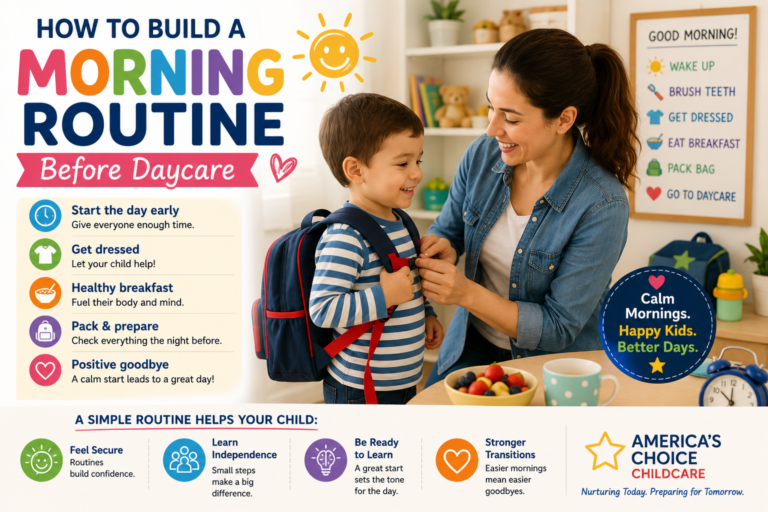
Morning Routine
Practice:
- Waking up at the same time
- Getting dressed independently
- Eating breakfast
- Brushing teeth
- Leaving the house on schedule
These habits make mornings smoother and less stressful once preschool starts.
Encourage Independence at Home
Preschool promotes independence and self-help skills.
Helping your child practice basic tasks at home can boost their confidence and readiness.
Encourage them to:
- Wash their hands
- Put away toys
- Use the restroom independently
- Put on shoes
- Open simple lunch containers
- Follow basic instructions
Children who feel capable of handling small tasks often transition more easily into classroom environments.
Read Books About Starting Preschool
Books can be powerful tools for helping children understand new experiences.
Reading stories about preschool introduces children to common situations they may encounter, including:
- Meeting teachers
- Making friends
- Participating in activities
- Saying goodbye to parents
Popular preschool-themed books include:
- “The Kissing Hand” by Audrey Penn
- “Llama Llama Misses Mama” by Anna Dewdney
- “Pete the Kitty’s First Day of Preschool” by Kimberly and James Dean
- “Maisy Goes to Preschool” by Lucy Cousins
After reading, ask your child questions and encourage them to share their thoughts and feelings.
Practice Separation Before Preschool Begins
Separation anxiety is common among preschool-aged children.
If your child has rarely been away from you, gradually introducing short periods of separation can be helpful.
Consider:
- Leaving them with trusted family members
- Arranging playdates
- Participating in community activities
- Enrolling in short enrichment classes
These experiences teach children that parents always return and help build emotional security.
When saying goodbye, keep departures brief and reassuring.
Avoid sneaking away, as this can damage trust and increase anxiety.
Help Your Child Develop Social Skills
Preschool involves interacting with peers throughout the day.
Before preschool begins, encourage opportunities for socialization.
Practice:
- Sharing toys
- Taking turns
- Listening when others speak
- Using polite words
- Following simple group instructions
Playdates, library story times, and community events provide valuable opportunities for social learning.
Children who have experience interacting with peers often feel more comfortable making friends in preschool.
Label Personal Belongings
Preschool classrooms can be busy environments with many children bringing similar items.
Label your child’s belongings, including:
- Backpacks
- Lunch boxes
- Water bottles
- Jackets
- Extra clothing
Clearly labeled items help teachers identify belongings and reduce the chances of lost items.
Additionally, involve your child in choosing their backpack or school supplies. This creates excitement and helps them feel ownership over their preschool experience.
Prepare for Emotional Reactions
Even well-prepared children may experience strong emotions during the first few days of preschool.
Your child may:
- Cry during drop-off
- Feel nervous
- Become clingy
- Express uncertainty
These reactions are completely normal.
Remain calm, supportive, and consistent.
Avoid lengthy goodbyes. Instead:
- Give a hug
- Offer reassurance
- Tell them when you’ll return
- Leave confidently
Most children settle into classroom activities shortly after parents leave.
Teachers are experienced in helping children navigate these emotions and develop comfort in their new environment.
Build Excitement Before the First Day
Creating positive anticipation can help ease first-day nerves.
Try activities such as:
- Shopping for school supplies together
- Choosing a backpack
- Picking out first-day clothes
- Creating a countdown calendar
- Discussing exciting classroom activities
Celebrating this milestone helps children view preschool as a positive and important event.
Pack Comfort Items When Allowed
Some preschool programs permit children to bring comfort items during the transition period.
Examples include:
- Small stuffed animals
- Family photos
- Special blankets
- Comfort toys
These familiar objects can provide emotional reassurance throughout the day.
Check with your preschool regarding their policies on comfort items.
Communicate With Teachers
Building a partnership with your child’s teachers supports a successful preschool experience.
Share important information such as:
- Allergies
- Medical needs
- Favorite activities
- Fears or anxieties
- Special routines
The more teachers understand your child’s personality and needs, the better they can support a smooth transition.
Don’t hesitate to ask questions about:
- Daily schedules
- Classroom expectations
- Communication methods
- Learning goals
Strong parent-teacher communication benefits everyone involved.
What to Expect During the First Week
The first week of preschool is often an adjustment period.
Some children adapt immediately, while others may need additional time.
You may notice:
Increased Tiredness
Children process a tremendous amount of new information during their first week.
Extra rest and quiet time after school can be beneficial.
Emotional Ups and Downs
Mood changes are normal during major transitions.
Remain patient and provide reassurance.
New Skills and Vocabulary
Many parents are surprised by how quickly children begin learning new songs, routines, and social skills.
Celebrate these achievements and encourage your child’s growing independence.
Common Mistakes Parents Should Avoid
To help ensure a smooth transition, avoid these common mistakes:
Talking About Your Own Anxiety
Children often absorb parental emotions.
Try to remain positive and confident, even if you’re feeling emotional yourself.
Creating Long Goodbyes
Lengthy farewells can increase anxiety.
Keep drop-offs brief and consistent.
Comparing Your Child to Others
Every child adjusts differently.
Focus on your child’s progress rather than comparing them to classmates or siblings.
Expecting Immediate Perfection
Adjustment takes time.
Allow your child to gradually become comfortable with new routines and expectations.
Benefits of Preschool for Houston Families
Quality preschool programs provide far more than childcare.
Children gain valuable experiences that support future academic and social success, including:
- Early literacy skills
- Language development
- Problem-solving abilities
- Emotional regulation
- Social interaction
- Independence
- School readiness
Houston families increasingly recognize the importance of high-quality early childhood education in preparing children for kindergarten and lifelong learning.
Final Thoughts
Preparing your child for their first day of preschool in Houston doesn’t have to be stressful. With early preparation, positive communication, consistent routines, and emotional support, children can approach this exciting milestone with confidence and enthusiasm.
Remember that every child adjusts at their own pace. Patience, encouragement, and collaboration with teachers can help create a successful preschool experience from day one.
The first day of preschool is more than just the beginning of school—it’s the start of a lifelong journey of learning, discovery, and growth. By taking proactive steps now, you can help your child build a strong foundation for future success both inside and outside the classroom.