
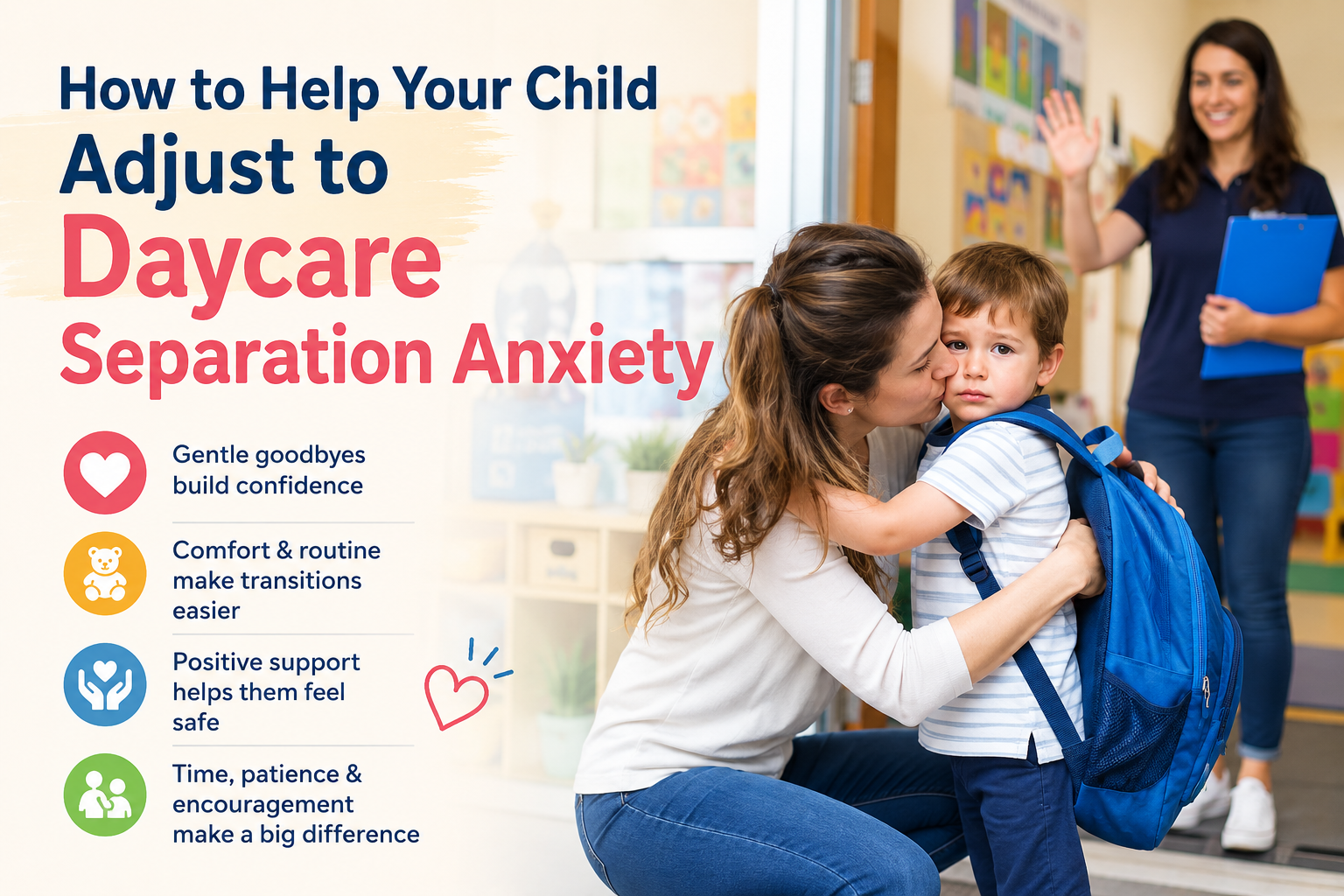
Starting daycare is a major milestone for both children and parents. While it opens doors to learning, social development, and independence, the transition can sometimes be emotionally challenging. One of the most common issues families face during this period is daycare separation anxiety.
Many parents experience difficult mornings filled with tears, clinginess, or emotional goodbyes. Children may hold tightly to a parent, cry when they leave, or become upset at the thought of attending daycare. While these moments can be stressful, separation anxiety is a completely normal part of early childhood development.
The good news is that with patience, consistency, and the right strategies, children can learn to feel safe and comfortable in their daycare environment.
In this guide, we’ll explore why separation anxiety happens, how long it may last, and practical ways to help your child adjust smoothly.
What Is Daycare Separation Anxiety?
Separation anxiety occurs when a child experiences stress or fear when separated from their primary caregiver. It commonly appears in babies and toddlers but can also affect preschool-aged children entering daycare for the first time.
Children often develop strong emotional bonds with parents or caregivers because those individuals provide safety, comfort, and predictability. When children suddenly find themselves in a new environment surrounded by unfamiliar people, it can feel overwhelming.
Common signs of daycare separation anxiety include:
- Crying during drop-off
- Refusing to enter the classroom
- Clinging tightly to parents
- Complaints of stomach aches
- Sudden mood changes
- Difficulty sleeping
- Increased irritability
- Fear of being left alone
These reactions are generally temporary and improve as children become more familiar with their new surroundings.
Why Children Experience Separation Anxiety
Understanding the reasons behind your child’s emotions can help parents respond with empathy.
Fear of the Unknown
Children thrive on familiarity and routines. Daycare introduces new teachers, children, schedules, and activities. Even positive changes can feel intimidating.
Strong Parent Attachment
Children naturally rely on parents for security. Being apart may feel confusing at first.
Changes in Routine
Major life changes such as moving homes, welcoming a sibling, changing caregivers, or starting daycare can increase anxiety levels.
Developmental Stage
Separation anxiety often appears between 8 months and 3 years of age because children begin understanding that parents exist even when out of sight.
How Long Does Daycare Separation Anxiety Last?
Parents often wonder whether their child’s emotional reactions are normal.
Every child adjusts differently:
- Some children adapt within a few days.
- Others need several weeks.
- Certain children may take one to two months before feeling fully comfortable.
Factors affecting adjustment time include:
- Child personality
- Previous social experiences
- Age
- Daycare environment
- Parent reactions during drop-off
Consistency usually speeds up the process.
Tips to Help Your Child Adjust to Daycare Separation Anxiety
- Introduce Daycare Gradually
Sudden transitions can feel overwhelming.
If possible:
- Visit the daycare before the first day
- Meet teachers together
- Explore classrooms
- Attend short orientation sessions
Allowing children to become familiar with the environment reduces uncertainty.
For example:
Instead of dropping your child off for a full day immediately, start with a shorter schedule and gradually increase attendance.
- Create a Predictable Morning Routine
Children feel secure when they know what to expect.
A calm morning routine may include:
- Wake up at the same time
- Eat breakfast together
- Get dressed
- Pack daycare items
- Leave home consistently
Predictable routines reduce stress and create a sense of stability.
Avoid rushing, as hurried mornings can increase anxiety.
- Keep Goodbyes Short and Positive
One of the biggest mistakes parents make is extending emotional goodbyes.
Parents often stay longer hoping to comfort their child, but this can unintentionally increase anxiety.
Instead:
- Hug your child
- Smile
- Use reassuring words
- Say goodbye confidently
- Leave promptly
Example:
“Have a great day. I’ll see you after snack time and story time.”
Children feel more secure when parents appear calm and confident.
- Never Leave Without Saying Goodbye
Some parents try sneaking away while their child is distracted.
Although it may avoid immediate tears, it can damage trust.
Children may begin worrying:
“Will Mom disappear again?”
Always say goodbye clearly, even if tears happen.
This helps children learn that parents leave—and come back.
- Bring a Comfort Item
Familiar objects can provide emotional reassurance.
Examples include:
- Favorite stuffed animals
- Small blankets
- Family photos
- Special toys
- Comfort objects approved by daycare staff
These items create a sense of security during stressful moments.
- Build Trust With Teachers
Children often look to parents for emotional cues.
When parents show confidence in teachers, children tend to feel safer.
Try:
- Speaking positively about caregivers
- Introducing teachers warmly
- Encouraging interactions
For example:
“Miss Sarah is excited to read stories with you today.”
Strong teacher-child relationships often reduce separation anxiety significantly.
- Talk Positively About Daycare
Children absorb emotional signals from parents.
Avoid saying things like:
- “I’m worried you’ll cry today.”
- “I feel bad leaving you.”
Instead use positive language:
- “You’re going to play with friends today.”
- “You’ll make fun art projects.”
- “Your teacher has exciting activities planned.”
Enthusiasm can help shape your child’s expectations.
- Read Books About Starting Daycare
Stories help children understand unfamiliar experiences.
Books can normalize feelings and show children that others experience similar emotions.
Popular choices include:
- Llama Llama Misses Mama
- The Kissing Hand
- Owl Babies
- Maisy Goes to Preschool
Reading together creates opportunities for conversation.
Ask questions such as:
- “How did the character feel?”
- “What helped them feel better?”
- Practice Separation at Home
Short separations help children learn independence gradually.
Consider:
- Playdates
- Grandparent visits
- Short babysitter sessions
- Independent play time
Small experiences build confidence over time.
Children learn:
“My parent leaves and comes back.”
- Stay Calm Even When It’s Hard
Parents often feel guilty during difficult drop-offs.
However, children can detect emotional tension.
If parents appear anxious, children may assume daycare is unsafe.
Remain calm, smile, and trust the process.
Remember:
Many children stop crying shortly after parents leave and quickly become involved in activities.
Teachers see this situation regularly and understand how to help children transition.
Mistakes Parents Should Avoid
While supporting your child, avoid these common mistakes:
Bribing Children
Avoid statements like:
“If you stop crying, I’ll buy you candy.”
This may create unhealthy associations.
Returning Repeatedly
Some parents return several times after saying goodbye.
Repeated departures often restart the emotional cycle.
Showing Excessive Worry
Children rely on parents for emotional guidance.
If parents appear fearful, children may become more uncertain.
Comparing Children
Avoid saying:
“Your friend doesn’t cry.”
Each child adjusts differently.
When Should Parents Be Concerned?
Separation anxiety is usually temporary.
However, parents may consider seeking guidance if:
- Symptoms continue for several months
- Anxiety becomes severe
- Child stops eating regularly
- Sleep patterns worsen dramatically
- Social withdrawal increases
- Extreme emotional reactions continue
Teachers and pediatric professionals can help evaluate whether additional support is needed.
How Daycare Benefits Children in the Long Term
Although the transition can be challenging initially, daycare often provides significant developmental advantages.
Children may gain:
Social skills
Children learn:
- Sharing
- Cooperation
- Communication
- Friendship building
Emotional development
Daycare helps children:
- Build confidence
- Develop independence
- Practice emotional regulation
Learning opportunities
Structured environments expose children to:
- Early literacy
- Problem-solving activities
- Creativity
- Group learning experiences
Routine and discipline
Daily schedules help children develop healthy habits and predictability.
Final Thoughts
Daycare separation anxiety can feel overwhelming for parents and children, but it is usually a temporary stage rather than a long-term problem.
Patience, consistency, and emotional support play a major role in helping children feel secure during this transition.
Remember that every child adjusts at their own pace. Some may settle quickly, while others need additional time and reassurance. Small daily steps often create significant progress over time.
Eventually, many children move from tears at drop-off to excitement about seeing friends, participating in activities, and exploring new experiences.
The first few days may be difficult, but with understanding and support, daycare can become a place where your child learns, grows, and thrives.