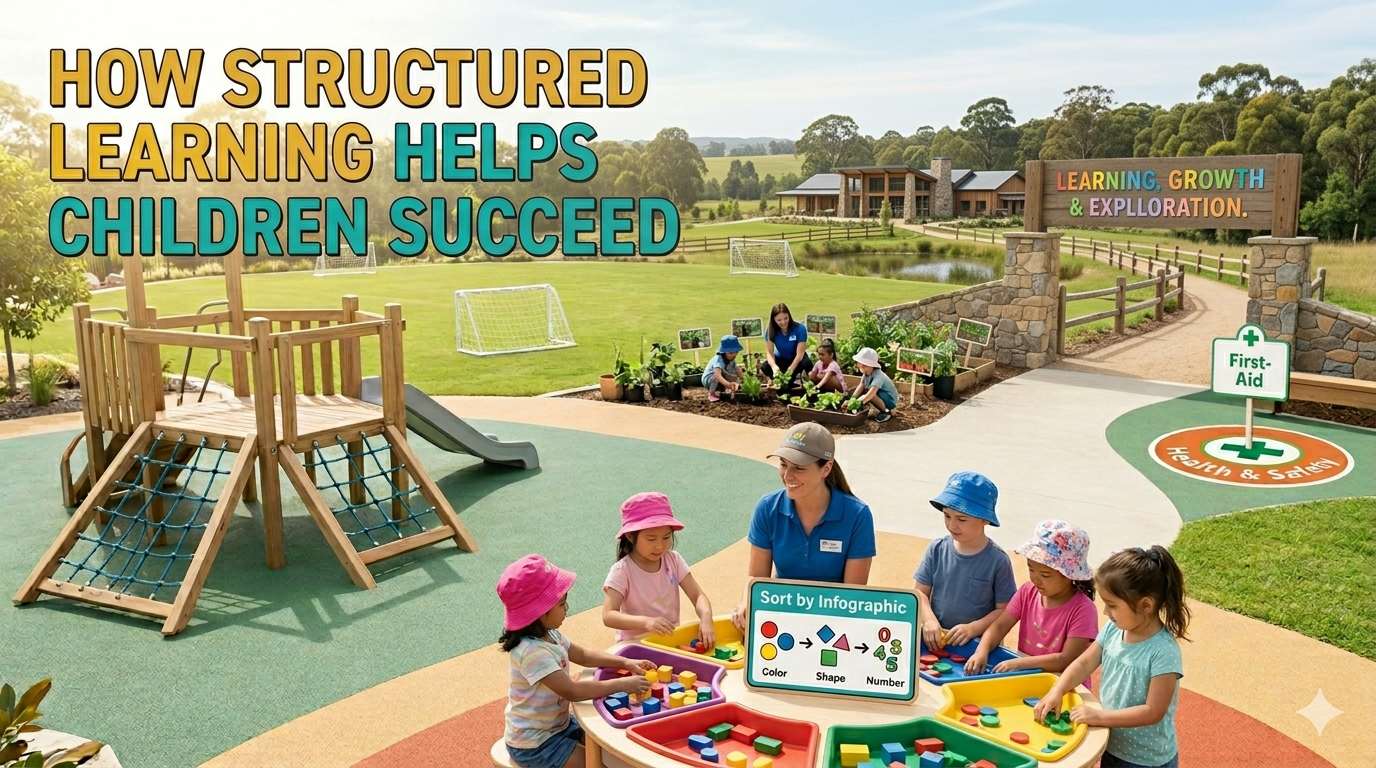
The preschool years are some of the most important stages in a child’s development. During these early years, children begin building the foundation for future learning, communication, social interactions, and emotional growth. Parents often focus on finding a childcare or preschool program that provides a fun and nurturing environment, but another important factor deserves attention—structured learning.
Structured learning does not mean placing children in strict classroom environments with constant academic pressure. Instead, it refers to an organized approach to learning where children participate in planned activities designed to support developmental goals while still allowing creativity and exploration.
A balanced structured learning program can help preschool children gain essential skills that prepare them for long-term success both inside and outside the classroom.
What Is Structured Learning?
Structured learning is an organized educational approach that follows a planned schedule and curriculum appropriate for children’s age and developmental stages.
Rather than random activities throughout the day, structured learning creates intentional experiences that help children learn specific skills through:
- Guided activities
- Hands-on experiences
- Teacher interaction
- Group participation
- Learning routines
- Educational play
The goal is not simply to keep children occupied but to encourage growth in multiple developmental areas.
Creates Consistency and Routine
Young children thrive when they know what to expect. Predictable schedules provide a sense of comfort and security that helps children feel confident in their environment.
Many preschool programs follow routines that may include:
- Morning welcome activities
- Story time
- Learning sessions
- Snack breaks
- Outdoor play
- Creative activities
- Rest time
Consistent routines help children understand expectations and transition more smoothly between activities.
Children who become familiar with routines often experience:
- Reduced anxiety
- Better behavior
- Improved attention
- Greater independence
When children understand what comes next in their day, they can focus more energy on learning.
Builds Strong Early Learning Skills
Structured learning programs introduce important concepts gradually and in ways preschool children can understand.
Children begin learning early academic skills such as:
Language and Literacy
Preschool learning activities strengthen communication abilities through:
- Reading sessions
- Storytelling
- Singing songs
- Letter recognition
- Vocabulary building
Strong language skills can improve children’s ability to express themselves and understand information later in school.
Early Math Skills
Math concepts are introduced through interactive activities and play.
Children may learn:
- Counting
- Number recognition
- Shapes
- Patterns
- Sorting and matching
These early experiences build confidence and familiarity with mathematical thinking.
Problem-Solving Skills
Structured learning activities often encourage children to think critically and find solutions.
Examples include:
- Building blocks
- Simple science experiments
- Puzzle games
- Matching exercises
Developing problem-solving abilities at an early age supports future academic growth.
Encourages Social Development
Preschool children are learning how to interact with others and build relationships. Structured learning environments create opportunities for positive social experiences.
Group activities teach children important skills including:
- Sharing
- Cooperation
- Listening
- Respecting others
- Taking turns
- Working together
Children who regularly participate in group settings often become more comfortable communicating with peers and adults.
Learning social skills during preschool years can help children adjust more easily when they enter kindergarten and elementary school.
Improves Emotional Development
Emotional growth is a major part of childhood development. Structured learning environments help children understand and manage their emotions in healthy ways.
Teachers guide children as they learn to:
- Identify feelings
- Express emotions appropriately
- Handle frustration
- Build self-confidence
- Develop patience
Children also learn that mistakes are part of learning and growth.
Positive reinforcement and supportive guidance create an environment where children feel comfortable trying new things without fear of failure.
Strengthens Attention and Focus
Preschool children naturally have shorter attention spans compared to older children. Structured learning helps gradually improve their ability to focus.
Activities designed around specific objectives encourage children to:
- Listen carefully
- Follow instructions
- Complete tasks
- Stay engaged
As children practice these skills daily, they often develop stronger concentration abilities.
Improved focus can later support classroom learning and academic performance.
Supports Independence and Responsibility
Structured learning programs often encourage children to complete age-appropriate tasks independently.
Examples include:
- Cleaning up toys
- Organizing materials
- Washing hands
- Putting away personal belongings
- Following classroom routines
These small responsibilities help children develop independence and confidence.
Children begin feeling proud of their accomplishments and become more willing to take initiative.
Developing self-help skills early also helps prepare children for kindergarten expectations.
Combines Learning with Play
One common misconception about structured learning is that it eliminates fun. High-quality preschool programs combine structured lessons with play-based experiences.
Play remains essential because children learn naturally through exploration and interaction.
Examples of learning through play include:
Creative Activities
Children participate in:
- Drawing
- Painting
- Music
- Arts and crafts
- Pretend play
Creative activities encourage imagination while improving fine motor skills.
Physical Activities
Movement-based activities support:
- Coordination
- Balance
- Strength
- Healthy habits
Examples include:
- Outdoor play
- Dancing
- Obstacle courses
- Group games
Interactive Learning Centers
Learning stations allow children to explore subjects independently while teachers guide experiences toward educational goals.
Combining structure with play creates an engaging environment where children enjoy learning.
Helps Prepare Children for School
One of the biggest advantages of structured learning is school readiness.
Children entering kindergarten encounter expectations such as:
- Following instructions
- Participating in group activities
- Listening to teachers
- Completing tasks
- Communicating with classmates
Structured preschool programs help children become comfortable with these routines before entering formal education.
School readiness involves more than academic knowledge. It also includes emotional maturity, social confidence, and independence.
Children who develop these skills often transition into school environments more smoothly.
Builds Confidence in Children
Confidence plays an important role in a child’s ability to learn and interact with others.
Structured learning environments provide opportunities for children to experience success regularly.
When children complete activities, solve problems, or learn new skills, they begin believing in their abilities.
Confident children are often more willing to:
- Ask questions
- Try new activities
- Participate in discussions
- Build friendships
- Explore learning opportunities
Small achievements during preschool years can create positive attitudes toward education that continue throughout life.
Final Thoughts
Structured learning helps preschool children succeed by providing organized experiences that support academic, social, emotional, and physical development. Through routines, guided activities, play-based learning, and supportive interactions, children develop skills that prepare them for future challenges and opportunities.
Quality preschool programs create a balance between education and enjoyment, allowing children to learn naturally while developing confidence and independence.
The preschool years are not only about preparing children for school; they are about helping children build the skills and habits that will support lifelong success. Structured learning provides that foundation and gives children the tools they need to thrive.