Choosing the right childcare program is one of the most important decisions parents make for their children. Beyond finding a safe place where children are supervised during the day, parents want an environment that supports learning, development, social growth, and emotional well-being. A quality childcare program does much more than provide care—it creates a foundation that helps children build skills they will use throughout their lives.
Many parents wonder what separates an average childcare center from a high-quality one. The answer lies in the combination of structured learning, safety measures, qualified teachers, engaging activities, and a nurturing environment designed specifically for children’s developmental needs.
Understanding what is included in a quality childcare program can help parents make informed decisions and ensure their child receives the best possible start.
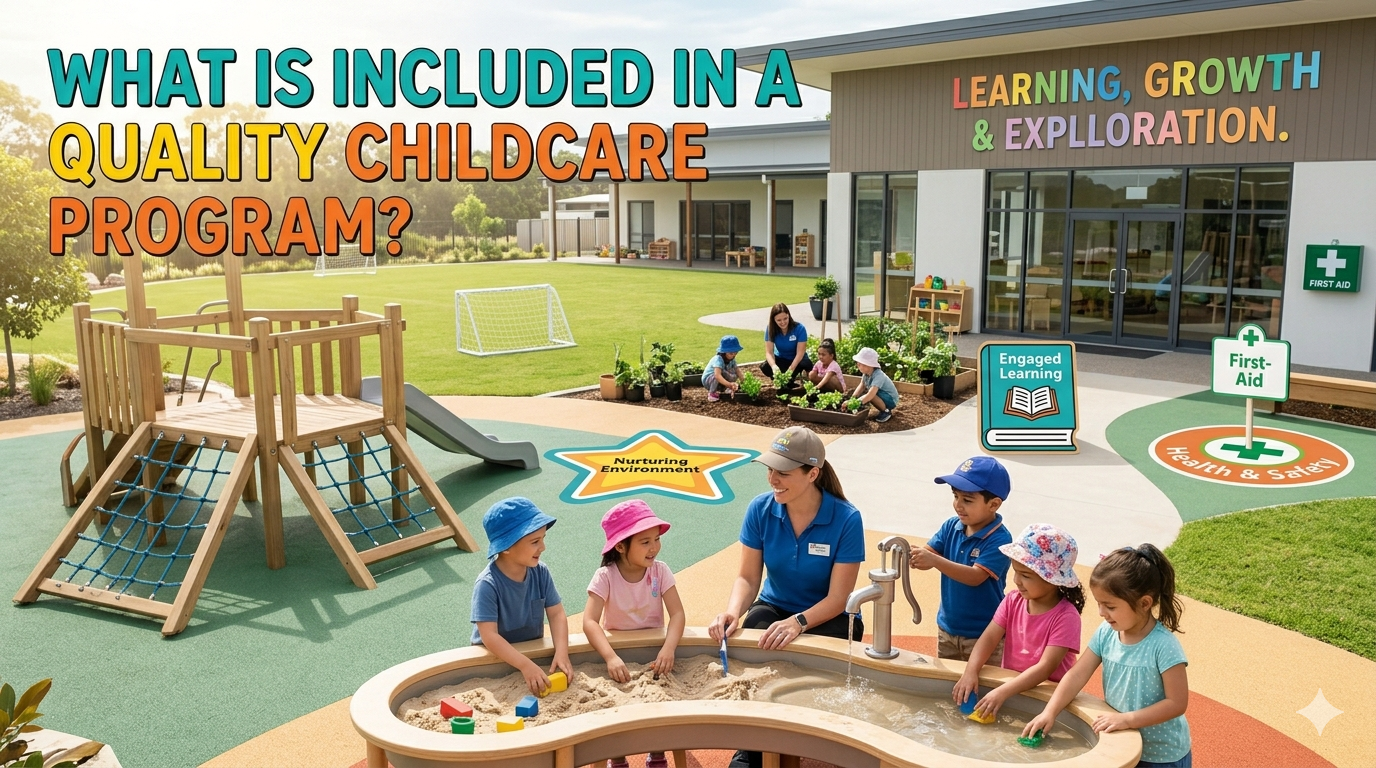
Safe and Secure Environment
Safety is one of the first things parents consider when choosing childcare. A quality childcare program prioritizes creating a secure environment where children feel protected and parents feel confident.
Safety features often include:
Controlled building access
Child check-in and check-out procedures
Trained staff members
Clean and sanitized classrooms
Childproof facilities
Emergency preparedness plans
Regular health and safety inspections
Children learn best when they feel safe and comfortable. A secure environment allows them to explore, interact, and participate in activities without unnecessary stress or fear.
Qualified and Caring Teachers
Teachers and caregivers play a major role in a child’s development. High-quality childcare programs employ experienced and trained staff members who understand early childhood education principles.
Good childcare educators often possess qualities such as:
Patience and compassion
Strong communication skills
Child development knowledge
Classroom management skills
Creativity in learning activities
Ability to build positive relationships with children
Children spend a significant amount of time with caregivers during their early years. Positive interactions with supportive teachers can improve emotional development and confidence.
Age-Appropriate Learning Curriculum
A quality childcare program includes a structured curriculum designed around the developmental stage of children. Learning should be fun, engaging, and suitable for each age group.
Programs typically focus on several learning areas:
Language and Communication Development
Children participate in activities that help improve:
Vocabulary skills
Storytelling
Listening abilities
Speaking confidence
Early reading preparation
Story time, songs, conversations, and reading sessions help children strengthen communication skills.
Cognitive Development
Children are naturally curious, and quality programs encourage critical thinking and problem-solving.
Examples include:
Puzzles
Matching games
Counting activities
Sorting exercises
Science exploration
These activities help children develop memory, reasoning, and analytical abilities.
Early Math Skills
Basic math concepts are introduced through play and hands-on activities.
Children learn:
Numbers
Shapes
Patterns
Counting
Measuring concepts
Early exposure builds confidence before formal schooling begins.
Social and Emotional Development
One of the most valuable parts of childcare is learning how to interact with others. Children begin developing social skills at an early age, and quality childcare programs create opportunities for positive interactions.
Social development activities help children learn:
Sharing
Cooperation
Respect
Teamwork
Communication
Empathy
Children also learn emotional skills such as:
Identifying feelings
Managing emotions
Building self-confidence
Handling challenges
Strong emotional development during early childhood often contributes to better relationships and school performance later in life.
Play-Based Learning Activities
Children learn naturally through play. Quality childcare programs understand that play is not simply entertainment—it is a powerful educational tool.
Play-based learning may include:
Creative Play
Creative activities encourage imagination and self-expression through:
Drawing
Painting
Arts and crafts
Music
Dramatic play
These activities stimulate creativity while improving motor skills.
Physical Play
Movement is essential for healthy development. Programs include activities that strengthen both large and small muscles.
Examples include:
Outdoor playground time
Dancing
Running games
Climbing activities
Ball games
Physical activity supports:
Coordination
Balance
Strength
Overall health
Group Play
Children learn cooperation and communication while participating in group activities with peers.
Healthy Meals and Nutrition Support
Nutrition plays an important role in a child’s growth and development. Many quality childcare programs provide balanced meals and snacks designed to support healthy habits.
Healthy meal plans typically include:
Fruits and vegetables
Whole grains
Protein-rich foods
Dairy products
Healthy snacks
Quality programs may also accommodate food allergies and dietary restrictions.
Good nutrition contributes to:
Energy levels
Brain development
Immune health
Concentration abilities
Teaching healthy eating habits during childhood can also encourage better long-term choices.
Daily Routine and Structure
Children thrive when they have predictable routines. A quality childcare program follows a daily schedule that balances learning, play, meals, and rest.
A typical routine may include:
Morning welcome activities
Learning sessions
Snack time
Outdoor play
Lunch
Rest periods
Creative activities
Story time
Consistent routines help children feel secure and understand expectations throughout the day.
Parent Communication and Involvement
Strong communication between parents and childcare providers is another important element of a quality program.
Parents should receive updates regarding:
Daily activities
Child progress
Behavioral observations
Milestones
Health information
Many childcare centers use communication apps, daily reports, or parent meetings to maintain transparency.
When parents and educators work together, children benefit from consistency between home and childcare environments.
Clean and Healthy Environment
Children spend many hours in childcare settings, making cleanliness essential. Quality childcare centers maintain high standards for hygiene and health practices.
Clean environments often include:
Regular toy sanitization
Handwashing routines
Clean classrooms
Disinfected surfaces
Health screening procedures
Maintaining cleanliness helps reduce illness and creates a healthier environment for everyone.
School Readiness Preparation
A quality childcare program prepares children for future academic success. School readiness goes beyond learning letters and numbers.
Programs often focus on developing:
Independence
Listening skills
Following instructions
Problem-solving abilities
Social confidence
Classroom behavior
Children who enter school with these foundational skills often adjust more easily to formal education settings.
Final Thoughts
A quality childcare program includes much more than supervision. It creates an environment where children can learn, grow, build friendships, and develop confidence. From qualified teachers and structured learning activities to healthy meals and emotional support, every element plays a role in supporting early childhood development.
For parents, understanding what makes a childcare program truly high quality can simplify the decision-making process. Choosing the right environment today can have a lasting impact on a child’s future learning, happiness, and success.
Investing time in selecting a program that values safety, education, and overall child development can provide children with the strong foundation they need for years to come.