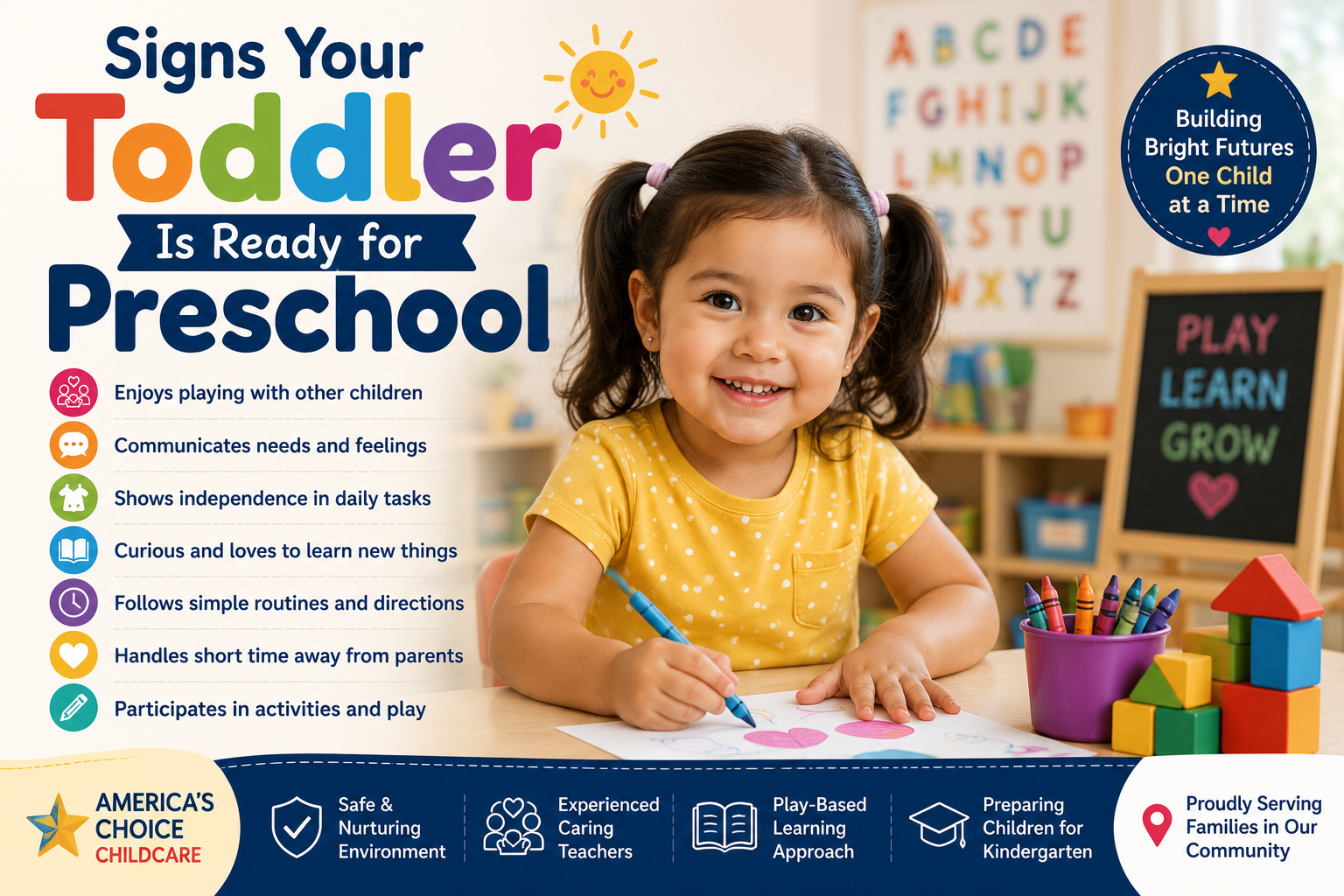
As a parent, one of the biggest milestones in your child’s early years is deciding when it’s time to start preschool. While every child develops at their own pace, there are several signs that indicate your toddler may be ready for this exciting new chapter. Preschool offers children the opportunity to learn, socialize, and develop important life skills in a structured yet nurturing environment.
If you’ve been asking yourself, “Is my toddler ready for preschool?” you’re not alone. Many parents have the same question, especially if it’s their child’s first experience away from home. Fortunately, readiness isn’t based solely on age. Instead, it’s a combination of emotional, social, physical, and developmental milestones.
In this guide, we’ll discuss the key signs your toddler is ready for preschool and how choosing a quality early childhood education program can help your child thrive.
Why Preschool Matters
Preschool is much more than a place where children spend time while parents work. It lays the foundation for lifelong learning by helping children develop academically, socially, emotionally, and physically.
Quality preschool programs encourage children to:
- Build confidence
- Develop communication skills
- Learn independence
- Make friends
- Strengthen problem-solving abilities
- Prepare for kindergarten
- Foster creativity through play
Research consistently shows that children who attend high-quality preschool programs often enter kindergarten with stronger language, literacy, and social skills.
1. Your Toddler Enjoys Being Around Other Children
One of the clearest signs of preschool readiness is an interest in interacting with other children.
If your toddler enjoys:
- Playing with cousins or neighbors
- Participating in group activities
- Sharing toys (even occasionally)
- Watching and copying other children
- Joining games at the playground
they’re likely ready to begin learning alongside peers in a preschool setting.
Preschool helps children develop valuable social skills through cooperative play, group learning, and daily interaction with classmates.
2. They Can Follow Simple Instructions
Preschool introduces routines and classroom expectations, so children benefit from being able to understand and follow simple directions.
Examples include:
- Put your toys away.
- Wash your hands.
- Sit for story time.
- Line up at the door.
- Come to the table.
Toddlers don’t need to follow every instruction perfectly, but showing they understand and attempt to follow basic directions is a positive indicator.
3. Your Child Is Curious About Learning
Toddlers are naturally curious, but preschool-ready children often begin asking more questions and showing excitement about discovering new things.
They may enjoy:
- Looking at books
- Singing songs
- Counting objects
- Naming colors
- Recognizing shapes
- Exploring nature
- Asking “Why?” frequently
A strong curiosity about the world is an excellent foundation for early education.
4. They Can Spend Short Periods Away from Parents
Separation anxiety is completely normal, especially during toddlerhood.
However, children who are becoming preschool-ready often show increasing comfort spending time with:
- Grandparents
- Babysitters
- Family members
- Trusted caregivers
Even if they are initially hesitant, they recover quickly after saying goodbye.
Preschool teachers are experienced in helping children adjust gradually to new environments and routines.
5. They Can Express Basic Needs
Children don’t need to speak perfectly before preschool, but they should be able to communicate simple needs such as:
- I’m hungry.
- I need help.
- I want water.
- I need the bathroom.
- I’m hurt.
Strong communication skills help children feel more comfortable while allowing teachers to respond appropriately to their needs.
6. They Show Growing Independence
Preschool encourages independence through daily routines and age-appropriate responsibilities.
Signs of independence include:
- Putting away toys
- Washing hands
- Eating with utensils
- Drinking from an open cup
- Attempting to dress themselves
- Carrying their backpack
These small achievements help children build confidence as they enter a classroom environment.
7. They Can Participate in Structured Activities
Preschool includes both free play and teacher-guided learning.
Your child may be ready if they can sit and participate in activities such as:
- Storytime
- Coloring
- Singing songs
- Simple crafts
- Circle time
- Educational games
Attention spans at this age are naturally short, so children aren’t expected to stay focused for long periods.
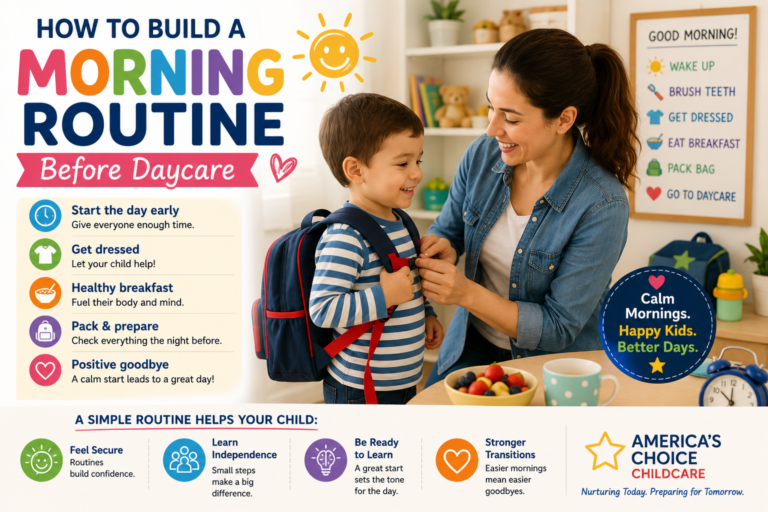
8. They Show Interest in Routines
Preschool follows a predictable daily schedule.
Many toddlers enjoy routines such as:
- Breakfast
- Playtime
- Storytime
- Outdoor play
- Lunch
- Nap time
Children who adapt well to routines often transition more smoothly into preschool.
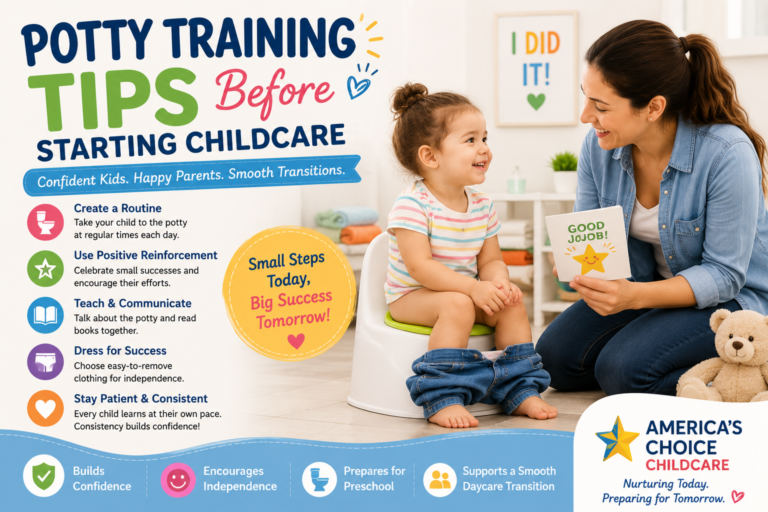
9. Potty Training Is Progressing
Every preschool has different potty-training requirements.
Some accept children who are still learning, while others require children to be fully potty trained.
Signs of readiness include:
- Staying dry for longer periods
- Communicating bathroom needs
- Showing interest in using the toilet
- Following bathroom routines
If your child is still learning, don’t worry. Many teachers work closely with families during the potty-training process.
10. Your Child Enjoys Exploring New Environments
Preschool introduces children to new experiences every day.
A preschool-ready child often enjoys:
- Visiting parks
- Exploring museums
- Trying new activities
- Meeting new people
- Learning through hands-on experiences
Curiosity and adaptability help children feel excited about learning.
Emotional Readiness Is Just as Important
Academic skills aren’t the only indicator of preschool readiness.
Children also benefit from developing emotional skills such as:
- Managing frustration
- Waiting their turn
- Asking for help
- Showing empathy
- Following routines
Teachers understand that emotional development continues throughout the preschool years and help children learn these skills gradually.
What If My Toddler Isn’t Ready Yet?
Every child develops differently.
Some children are ready at age two, while others benefit from waiting until they’re closer to three or four years old.
If your child struggles with:
- Separation anxiety
- Communication
- Social interaction
- Following routines
don’t assume preschool isn’t the right fit. Many high-quality preschool programs are specifically designed to nurture these skills in a supportive environment.
Speak with the preschool staff about your concerns. They can help determine whether your child would benefit from a gradual transition or a part-time schedule.
How Preschool Helps Children Grow
Children often make remarkable progress within just a few months of attending preschool.
Benefits include:
Stronger Communication Skills
Children expand their vocabulary through songs, stories, conversations, and classroom activities.
Better Social Skills
Daily interaction teaches children how to:
- Share
- Cooperate
- Solve conflicts
- Build friendships
- Respect others
Increased Confidence
Completing simple tasks independently helps children develop self-esteem and resilience.
Improved Problem-Solving
Hands-on activities encourage children to think creatively and solve age-appropriate challenges.
School Readiness
Children become familiar with classroom routines, making the transition to kindergarten much easier.
Choosing the Right Preschool
Not every preschool is the same.
When touring childcare centers, ask about:
- Teacher qualifications
- Safety procedures
- Daily routines
- Learning curriculum
- Parent communication
- Classroom sizes
- Outdoor play
- Kindergarten readiness
Observe how teachers interact with children and whether the environment feels warm, engaging, and welcoming.
Why Families Choose America’s Choice Childcare
At America’s Choice Childcare, we understand that every child develops at their own pace. Our preschool program is designed to support each child’s unique journey while providing a safe, nurturing, and stimulating learning environment.
Families choose America’s Choice Childcare because we offer:
- Experienced and caring educators
- Age-appropriate classrooms
- Play-based learning experiences
- Safe and secure facilities
- Structured daily routines
- Small class sizes
- Kindergarten readiness programs
- Strong parent communication
- Fun indoor and outdoor learning activities
Our goal is to help every child build confidence, develop friendships, and discover a lifelong love of learning.
Tips for Preparing Your Toddler for Preschool
You can make the transition to preschool easier by preparing your child ahead of time:
- Talk positively about preschool and what to expect.
- Read books about starting school.
- Practice short separations with trusted caregivers.
- Encourage independent skills like washing hands and putting on shoes.
- Visit the preschool together before the first day.
- Establish a consistent bedtime and morning routine.
- Label your child’s belongings to help them feel organized and secure.
These simple steps can help your toddler feel more comfortable and excited about their new adventure.
Final Thoughts
Every child reaches preschool readiness in their own unique way, but common signs include growing independence, curiosity, communication skills, social interest, and the ability to follow simple routines.
Remember, preschool isn’t about expecting perfection—it’s about giving children the opportunity to learn, grow, and thrive in a supportive environment. With caring teachers, engaging activities, and opportunities to build confidence, preschool becomes an exciting milestone that prepares children for lifelong success.
If you’re noticing these signs in your toddler, it may be the perfect time to explore a quality preschool program like America’s Choice Childcare, where every child is encouraged to learn, play, and reach their full potential.
SEO Meta Title
Signs Your Toddler Is Ready for Preschool | America’s Choice Childcare
SEO Meta Description
Wondering if your toddler is ready for preschool? Learn the top signs of preschool readiness and how early childhood education helps children build confidence, social skills, and kindergarten readiness.