Potty training is one of the biggest milestones in your child’s early development. While every child learns at their own pace, many parents begin potty training before their little one starts childcare or preschool. Successfully introducing potty training before childcare can help children feel more confident, independent, and comfortable in their new learning environment.
If you’re preparing your child for daycare or preschool, you may be wondering when to begin potty training, how to recognize readiness, and what strategies work best. The good news is that with patience, consistency, and encouragement, potty training can become a positive experience for both parents and children.
In this guide, we’ll share practical potty training tips, signs your child is ready, common challenges, and how childcare providers can support your family’s potty training journey.
Why Potty Training Before Childcare Matters
Many childcare centers welcome children at different stages of potty training, while some preschool programs may require children to be partially or fully toilet trained before enrollment.
Even if potty training isn’t required, introducing healthy bathroom habits before childcare offers several benefits.
Potty-trained children often experience:
- Greater independence
- Increased confidence
- Easier transitions into preschool
- Improved communication skills
- Better hygiene habits
- More participation in classroom activities
Most importantly, children begin learning responsibility while building self-esteem through daily accomplishments.
When Should You Start Potty Training?
There is no “perfect” age to begin potty training.
Most children show signs of readiness between 18 months and 3 years, although every child develops differently.
Rather than focusing on age, watch for developmental signs that indicate your child may be ready.
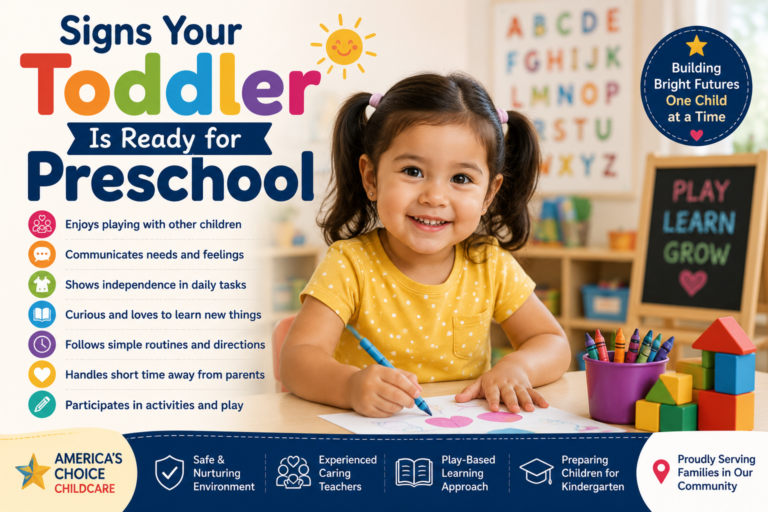
Signs Your Child Is Ready for Potty Training
Children often show several readiness signs before they’re ready to begin toilet learning.
These may include:
- Staying dry for two or more hours
- Showing interest in the bathroom
- Asking to wear underwear
- Telling you when their diaper is wet or dirty
- Hiding when they need to use the bathroom
- Following simple instructions
- Pulling pants up and down independently
- Showing interest in copying adults
The more readiness signs your child displays, the smoother the potty-training process is likely to be.
Start Before the First Day of Childcare
Whenever possible, begin potty training several weeks—or even months—before your child’s first day at childcare.
This gives your child time to:
- Learn new routines
- Build confidence
- Practice using the toilet
- Adjust without the added stress of a new environment
Starting early also gives parents and childcare teachers an opportunity to work together during the transition.
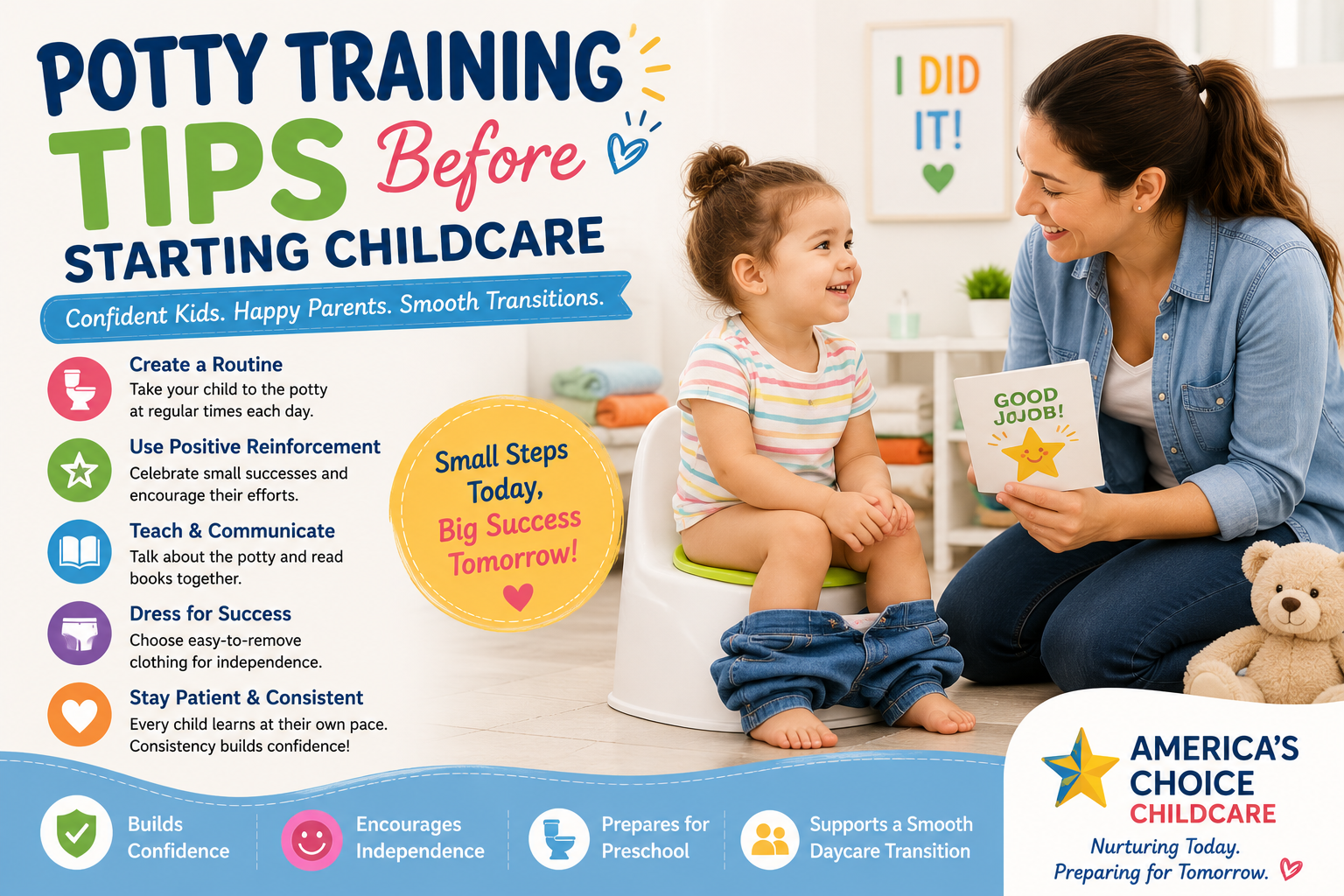
Create a Consistent Potty Routine
Children thrive on predictable routines.
Encourage your child to sit on the potty at consistent times each day, such as:
- After waking up
- Before leaving home
- Before meals
- After meals
- Before nap time
- Before bedtime
Regular opportunities help children recognize their body’s natural signals.
Make the Potty Positive
Potty training should be encouraging—not stressful.
Celebrate every success, no matter how small.
Positive reinforcement may include:
- Verbal praise
- High-fives
- Stickers
- Small rewards
- Happy dances
- Encouraging words
Avoid punishment or criticism after accidents, as this may increase anxiety and slow progress.
Let Your Child Choose Potty Supplies
Giving children choices helps them feel involved.
Allow your child to choose:
- A child-sized potty
- Colorful underwear
- Toilet seat adapter
- Step stool
- Hand soap
- Bathroom decorations
Excitement about their new potty supplies often increases motivation.
Dress for Success
Complicated clothing can make potty training more difficult.
Choose clothing that’s easy to remove, such as:
- Elastic-waist pants
- Leggings
- Shorts
- Simple dresses
Avoid:
- Tight jeans
- Belts
- Overalls
- Complicated buttons
Simple clothing helps children reach the bathroom independently.
Teach Proper Bathroom Hygiene
Potty training isn’t only about using the toilet.
Children should also begin learning healthy hygiene habits, including:
- Wiping properly (with assistance when needed)
- Flushing the toilet
- Washing hands with soap
- Drying hands thoroughly
These routines become part of everyday independence.
Watch for Your Child’s Signals
Every child gives different signs when they need to use the bathroom.
You may notice your toddler:
- Stops playing suddenly
- Crosses their legs
- Squats
- Holds themselves
- Hides behind furniture
- Becomes unusually quiet
Recognizing these signals allows you to guide your child to the potty before accidents happen.
Stay Calm During Accidents
Accidents are a normal part of learning.
Even children who have been potty trained for weeks may occasionally have accidents.
When they happen:
- Stay calm.
- Offer reassurance.
- Help clean up.
- Encourage trying again next time.
Avoid expressing disappointment, which may create unnecessary pressure.
Be Consistent at Home and Childcare
Consistency is one of the biggest factors in successful potty training.
Talk with your childcare provider about:
- Your child’s potty schedule
- Words your child uses
- Rewards you’re using
- Any concerns
- Recent progress
Working together ensures children receive the same expectations at home and childcare.
Encourage Independence
As children become more comfortable using the toilet, encourage them to complete more tasks independently.
These include:
- Pulling down pants
- Sitting on the toilet
- Flushing
- Washing hands
- Pulling clothes back up
Small responsibilities build confidence and prepare children for preschool routines.
Read Books About Potty Training
Many toddlers enjoy stories about children learning to use the potty.
Books help normalize the experience while reducing anxiety.
Reading together creates opportunities to discuss:
- Using the toilet
- Hygiene
- Independence
- Growing up
Children often become more excited about potty training after seeing favorite characters go through the same experience.
Avoid Comparing Children
Every child learns differently.
Some toddlers master potty training within a few weeks.
Others need several months.
Avoid comparing your child with:
- Friends
- Siblings
- Cousins
- Classmates
Patience helps children build confidence at their own pace.
Practice Before Leaving Home
Before going to daycare or preschool each morning, encourage your child to use the toilet.
Creating this habit helps reduce accidents during drop-off and teaches children to begin their day with healthy routines.
Pack Extra Clothes
Even after successful potty training, accidents may occasionally happen.
Include in your childcare bag:
- Two or three extra outfits
- Underwear
- Socks
- Plastic bag for wet clothing
- Wipes (if requested)
Being prepared reduces stress for both parents and teachers.
Help Your Child Communicate
Children should learn simple phrases they can use at childcare, such as:
- I need the potty.
- I have to go.
- Can you help me?
- I had an accident.
Good communication helps teachers respond quickly and support children when needed.
Common Potty Training Challenges
Many families experience setbacks during potty training.
Common challenges include:
Fear of the Toilet
Some children become nervous about flushing sounds or large toilets.
Try using a child-sized potty before transitioning to the regular toilet.
Refusing to Sit
Avoid forcing your child.
Instead, encourage short potty sits while reading a favorite book or singing songs.
Regression
Starting childcare, moving homes, welcoming a new sibling, or illness can temporarily interrupt potty training.
Stay patient and continue following your routine.
Constipation
Fear of bowel movements sometimes delays potty training.
Offer plenty of:
- Water
- Fruits
- Vegetables
- Fiber-rich foods
Consult your pediatrician if constipation becomes frequent.
How Childcare Centers Support Potty Training
Quality childcare providers understand that potty training is a developmental process.
Teachers encourage children by:
- Following consistent schedules
- Offering gentle reminders
- Celebrating successes
- Assisting with hygiene
- Encouraging independence
- Communicating with parents
Positive reinforcement at childcare helps children gain confidence while learning new routines.
Why Families Choose America’s Choice Childcare
At America’s Choice Childcare, we recognize that every child reaches potty training milestones differently. Our caring educators work closely with families to create a supportive and encouraging environment where children can develop confidence and independence.
Our childcare programs provide:
- Experienced early childhood educators
- Consistent daily routines
- Patient guidance during potty training
- Positive reinforcement
- Clean and child-friendly bathrooms
- Strong parent communication
- Safe and nurturing classrooms
- Age-appropriate learning experiences
We believe every child deserves encouragement, patience, and support while mastering this important developmental milestone.
Tips for Parents
To make potty training before childcare as successful as possible:
- Begin when your child shows readiness signs.
- Stay patient and positive.
- Create consistent routines.
- Praise effort rather than perfection.
- Keep communication open with childcare teachers.
- Dress your child in easy-to-remove clothing.
- Practice good hygiene habits every day.
- Expect occasional accidents.
Remember, progress is more important than perfection.
Final Thoughts
Potty training is an exciting step toward independence and an important part of preparing your child for childcare or preschool. While every child learns at their own pace, consistency, encouragement, and patience make the journey much smoother.
By recognizing readiness signs, creating predictable routines, celebrating small successes, and working together with your childcare provider, you can help your child develop the confidence they need to thrive both at home and in the classroom.
At America’s Choice Childcare, we’re committed to supporting families through every stage of early childhood development—including potty training. Together, we can help your child build the skills, confidence, and independence needed for a successful start in childcare and beyond.