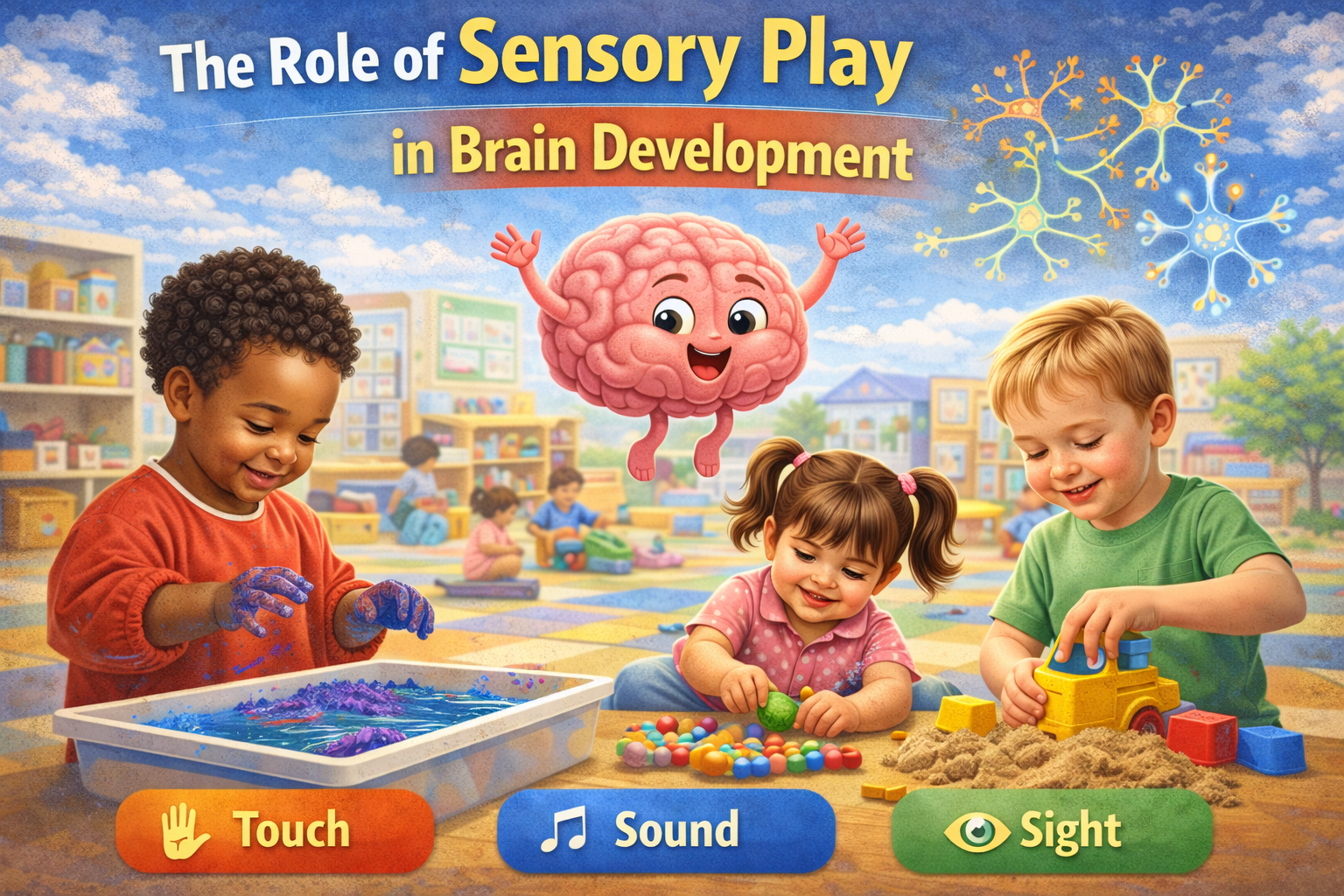
From splashing water to squishing playdough, sensory play is one of the most powerful ways young children learn about the world. While these activities may look simple—or even messy—they play a critical role in brain development, cognitive growth, and early learning.
Sensory play engages a child’s senses and helps build neural connections that support thinking, problem-solving, language, and emotional regulation. For infants, toddlers, and preschoolers, sensory experiences are not optional extras—they are foundational to healthy development.
This article explores how sensory play supports toddler brain development, why it’s essential in early learning, and how parents and caregivers can use sensory activities to support growing minds.
What Is Sensory Play?
Sensory play includes activities that stimulate one or more of the five senses:
- Touch
- Sight
- Sound
- Smell
- Taste
It also involves movement and balance (often called proprioceptive and vestibular senses). Examples of sensory play include:
- Playing with sand, water, or mud
- Finger painting
- Exploring textures like soft, rough, or squishy materials
- Listening to music or nature sounds
- Pouring, scooping, and squeezing objects
Sensory play allows children to explore freely, make discoveries, and learn through hands-on experiences.
Why Sensory Play Is Essential for Brain Development
The brain develops rapidly in early childhood. During this time, neural pathways are formed through experiences—especially sensory experiences.
Sensory play helps:
- Strengthen neural connections
- Improve information processing
- Support memory and attention
- Build the foundation for complex thinking
The more meaningful and varied a child’s sensory experiences are, the stronger and more efficient these brain connections become.
How Sensory Play Strengthens Neural Pathways
Learning Through Experience
When children touch, move, listen, and observe, their brains process multiple types of information at once. This multi-sensory input strengthens communication between different areas of the brain.
For example:
- Scooping water involves touch, movement, and visual feedback
- Finger painting combines texture, color recognition, and motion
- Sand play supports hand coordination and sensory feedback
Each experience reinforces neural pathways that support learning, coordination, and problem-solving.
Sensory Play and Toddler Brain Development
- Supports Cognitive Growth
Cognitive development includes thinking, reasoning, memory, and understanding cause and effect.
Sensory play helps toddlers:
- Experiment and observe outcomes
- Understand concepts like full/empty, heavy/light, wet/dry
- Practice problem-solving through trial and error
These early cognitive skills form the building blocks for math, science, and logical thinking later on.
- Encourages Exploration and Curiosity
Children are natural explorers. Sensory play invites them to ask:
- “What happens if I do this?”
- “How does this feel?”
- “Why did that change?”
This curiosity-driven learning strengthens critical thinking and builds confidence in exploring new experiences.
- Builds Language and Communication Skills
Sensory experiences naturally encourage communication.
As children explore, they learn words to describe:
- Textures (soft, rough, sticky)
- Actions (pour, squeeze, mix)
- Sensations (cold, warm, loud, quiet)
Caregivers who talk through sensory play help expand vocabulary and support expressive language development.
Sensory Play and Emotional Development
- Supports Emotional Regulation
Sensory play has a calming effect on many children.
Activities such as:
- Water play
- Playdough manipulation
- Soft textures and rhythmic movement
help children regulate emotions, reduce stress, and manage overstimulation. This is especially helpful for toddlers who are still learning how to express and manage feelings.
- Builds Confidence and Independence
Sensory play is often child-led, allowing children to make choices and explore at their own pace.
This autonomy:
- Builds self-confidence
- Encourages decision-making
- Helps children trust their abilities
When children feel capable, they are more willing to try new challenges and persist through difficulty.
Sensory Play and Physical Development
- Strengthens Fine and Gross Motor Skills
Many sensory activities naturally support motor development.
Examples include:
- Scooping and pouring (fine motor skills)
- Crawling through tunnels (gross motor skills)
- Squeezing clay or dough (hand strength)
These movements support coordination, balance, and muscle control—essential for writing, dressing, and daily tasks.
Sensory Play in Early Learning Activities
- Supports School Readiness
Sensory play builds skills needed for structured learning environments.
It helps children develop:
- Focus and attention
- Ability to follow simple instructions
- Comfort with new materials and environments
- Problem-solving skills
Children who engage regularly in early learning sensory activities often transition more easily into preschool and kindergarten.
- Encourages Creative and Flexible Thinking
There’s no “right” way to do sensory play. This open-ended nature encourages creativity.
Children learn to:
- Try different approaches
- Adapt when things don’t work
- Think flexibly
Creative thinking developed through sensory play supports innovation and resilience later in life.
Types of Sensory Play That Support Brain Development
- Tactile Sensory Play
Touch-based activities include:
- Sand and rice bins
- Playdough and clay
- Fabric and texture boards
These activities strengthen sensory processing and fine motor skills.
- Water and Messy Play
Water play is a favorite for good reason.
Benefits include:
- Understanding volume and movement
- Calming sensory input
- Exploration of cause and effect
Messy play encourages freedom and creativity without pressure for perfection.
- Sensory Art Activities
Art combines sensory input with self-expression.
Examples:
- Finger painting
- Chalk and crayon play
- Collage-making with textured materials
Art-based sensory play supports emotional expression and cognitive development simultaneously.
- Sound and Music Sensory Play
Auditory sensory play includes:
- Singing songs
- Exploring instruments
- Listening to different sounds
These activities strengthen auditory processing, rhythm awareness, and language development.
The Role of Adults in Sensory Play
Caregivers and educators play a supportive—not directive—role.
They can:
- Provide safe, varied materials
- Ask open-ended questions
- Describe what children are experiencing
- Allow exploration without interruption
The goal is not to control the play, but to enrich it with language and encouragement.
Sensory Play at Home and in Early Learning Programs
High-quality early learning environments integrate sensory play into daily routines.
This may include:
- Sensory stations
- Outdoor exploration
- Art and water play
- Movement-based activities
At home, simple materials like bowls, water, paper, and everyday objects are more than enough to create meaningful sensory experiences.
Addressing Common Concerns About Sensory Play
Some parents worry about mess or lack of structure. However, sensory play is most effective when children are allowed freedom within safe boundaries.
Mess can be managed—and the developmental benefits far outweigh the inconvenience.
Signs Sensory Play Is Supporting Development
Positive signs include:
- Increased curiosity
- Longer attention spans
- Improved problem-solving
- Greater emotional regulation
- Growing confidence
These are indicators that sensory experiences are strengthening brain development.
Long-Term Benefits of Sensory Play
The impact of sensory play extends well beyond early childhood.
Children who regularly engage in sensory activities often show:
- Stronger learning skills
- Better emotional control
- Increased creativity
- Greater adaptability
These skills support success in school and everyday life.
Final Thoughts: Sensory Play Builds Strong Brains
Sensory play is not just fun—it is a vital part of early learning and toddler brain development. By engaging the senses, children strengthen neural pathways, build cognitive skills, and develop emotional resilience.
Whether through water play, art, movement, or tactile exploration, sensory play helps children understand the world and their place in it. By prioritizing sensory-rich early learning activities, parents and educators give children the tools they need to grow into curious, capable, and confident learners.