
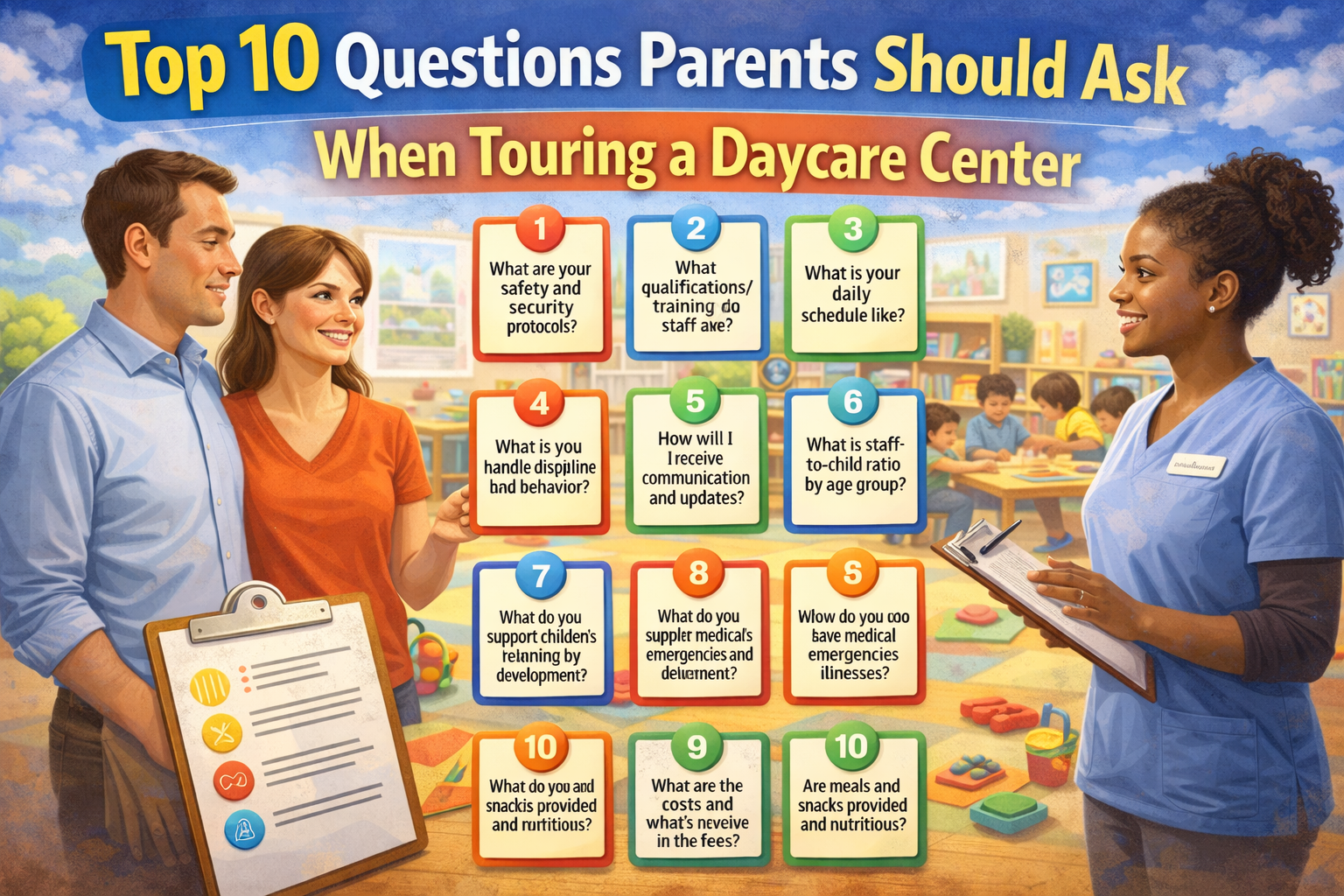
Touring a daycare center is one of the most important steps in choosing the right childcare for your child. Websites and brochures can look impressive, but a daycare visit reveals how a center truly operates day to day. Asking the right questions during a tour helps parents evaluate safety, staff qualifications, curriculum quality, and the overall learning environment.
This must-read guide outlines the top 10 daycare tour questions every parent should ask to confidently assess whether a childcare center is the right fit for their child and family.
Why Asking the Right Daycare Tour Questions Matters
Choosing childcare is not just about availability—it’s about trust. The answers you receive during a tour can help you understand:
- How children are cared for and supervised
- How staff handle learning, behavior, and safety
- Whether the environment supports healthy development
- How transparent and professional the center is
Well-prepared questions turn a daycare tour into a meaningful evaluation, not just a walkthrough.
- Is the Daycare Licensed and Properly Certified?
This should always be your first question.
What to Look For:
- Active state licensing
- Displayed inspection or certification records
- Compliance with local childcare regulations
Licensing ensures the daycare meets minimum standards for safety, staffing, and operations. Additional certifications often indicate higher quality and accountability.
- What Are the Teacher-to-Child Ratios?
Teacher-to-child ratios directly affect supervision, safety, and learning quality.
Ask:
- What are the ratios for each age group?
- Do ratios change during naps, drop-off, or pick-up times?
Lower ratios mean more individual attention, better emotional support, and safer environments—especially for infants and toddlers.
- What Qualifications and Training Do Staff Members Have?
The quality of care depends heavily on the people providing it.
Important Follow-Up Questions:
- Are caregivers trained in early childhood education?
- Do staff receive ongoing professional development?
- Are background checks conducted?
Experienced, well-trained caregivers are better equipped to support child development and respond to challenges effectively.
- How Does the Daycare Handle Safety and Emergencies?
Safety should be clearly planned, not improvised.
Ask About:
- Emergency evacuation procedures
- Illness and injury protocols
- CPR and first-aid training for staff
- Secure entry and exit systems
A high-quality daycare will answer these questions confidently and transparently.
- What Does a Typical Daily Schedule Look Like?
A structured, age-appropriate routine supports learning and behavior.
Look For Balance Between:
- Learning activities
- Free play
- Outdoor time
- Meals and rest
Ask to see a sample daily schedule to understand how your child’s day will flow.
- What Curriculum or Learning Approach Is Used?
Daycare should support early learning—not just supervision.
Ask:
- Is the curriculum play-based, structured, or blended?
- How does the program support language, motor, and social development?
- How are activities adapted for different learning styles?
A strong curriculum supports the whole child—academically, socially, and emotionally.
- How Are Behavior and Discipline Handled?
Behavior guidance reveals a lot about a daycare’s values.
Ask Specifically:
- How do teachers respond to challenging behavior?
- Is discipline positive and age-appropriate?
- Are parents informed about behavioral concerns?
Avoid centers that rely on harsh discipline or lack clear behavior policies.
- How Does the Daycare Communicate With Parents?
Open communication builds trust and partnership.
Ask About:
- Daily updates or reports
- Progress and developmental feedback
- Parent-teacher communication methods
- Open-door or visitation policies
Strong communication ensures parents stay informed and involved in their child’s care.
- What Health, Hygiene, and Nutrition Practices Are in Place?
Cleanliness and nutrition are essential for children’s well-being.
Important Questions Include:
- How often are toys and classrooms sanitized?
- What are the diapering and handwashing procedures?
- Are meals and snacks provided? Are they nutritious?
- How are food allergies handled?
Healthy environments support both learning and physical development.
- How Does the Daycare Support Emotional and Social Development?
Social and emotional learning is just as important as academics.
Ask:
- How do teachers help children build friendships?
- How are emotions acknowledged and managed?
- How does the program support shy or sensitive children?
A nurturing daycare helps children feel safe, confident, and emotionally supported.
Bonus Tip: Observe While You Ask
While asking questions, pay attention to what you see.
Look for:
- Calm, engaged teachers
- Happy, supervised children
- Clean, organized classrooms
- Positive interactions
Observation often confirms—or contradicts—the answers you receive.
Red Flags to Watch for During a Daycare Tour
Be cautious if you notice:
- Unwillingness to answer questions
- Overcrowded classrooms
- High staff turnover
- Poor cleanliness or supervision
- Vague or inconsistent responses
Trust your instincts—if something feels off, it’s okay to keep looking.
How to Compare Multiple Daycare Centers
After touring several centers, compare them using consistent criteria:
- Safety standards
- Staff experience
- Learning environment
- Communication style
- Overall comfort level
Using the same daycare evaluation questions makes comparisons clearer and more objective.
Why These Questions Help You Choose Childcare Confidently
Choosing childcare is a major decision, and parents deserve clarity and confidence. Asking thoughtful daycare tour questions helps uncover how a center truly operates and whether it aligns with your child’s needs and your family’s values.
A quality daycare will welcome these questions—they signal an informed, engaged parent.
Final Thoughts: The Right Questions Lead to the Right Choice
Touring a daycare center isn’t just about seeing classrooms—it’s about understanding the care, safety, and learning your child will experience every day. By asking these top 10 questions, parents gain insight into what truly matters: child safety, quality education, emotional support, and trust.
The right daycare will not only answer your questions—it will make you feel confident, reassured, and excited about your child’s journey ahead.