
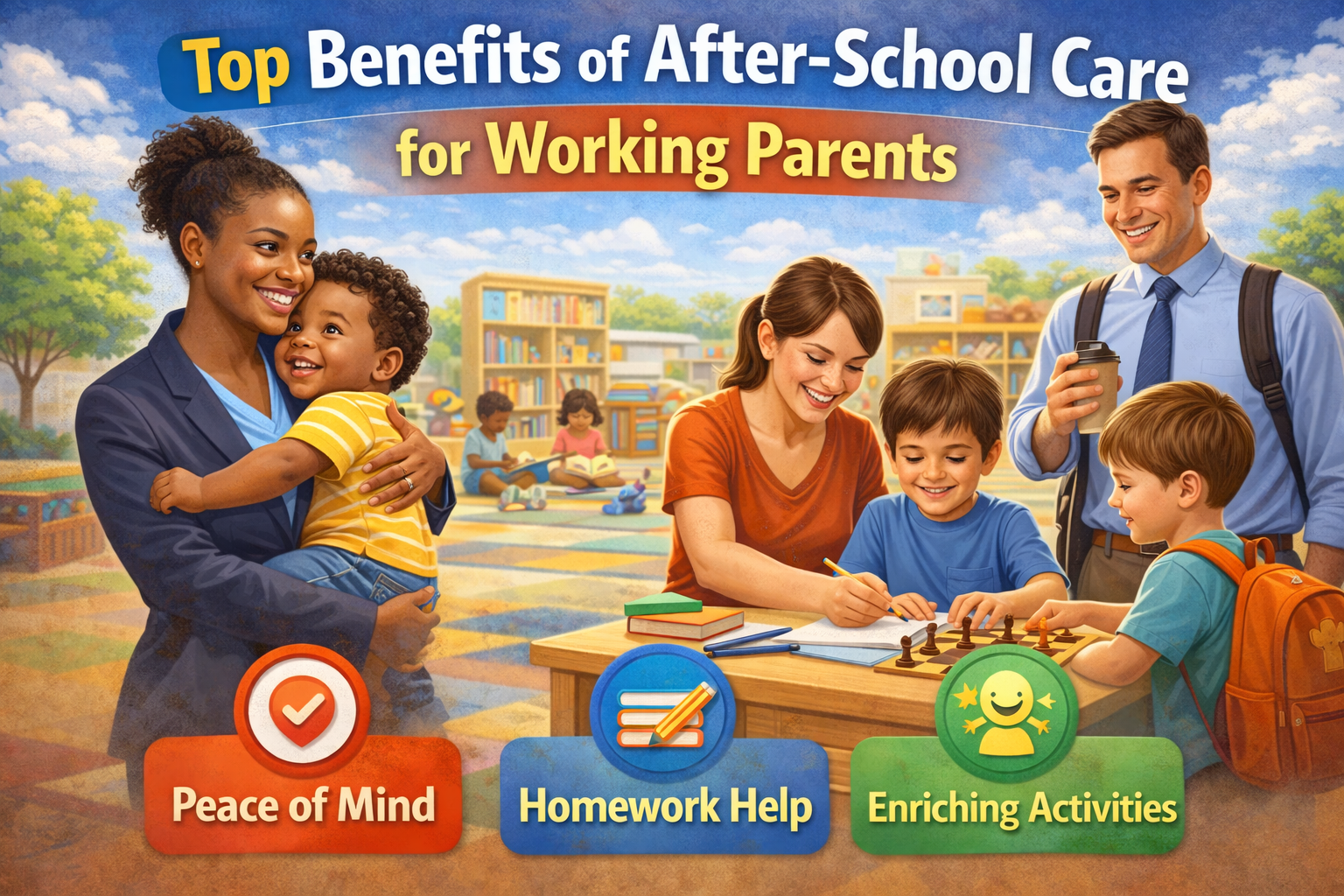
For working parents, the hours between school dismissal and the end of the workday can be the most stressful part of the day. Balancing professional responsibilities while ensuring children are safe, supported, and productive after school is a challenge many families face. This is where after-school care becomes an essential support system—not just for children, but for parents as well.
High-quality after-school programs provide far more than supervision. They offer academic support, social development, structure, and peace of mind, helping working parents manage their schedules without compromising their child’s growth or safety. This article explores the top benefits of after-school care and why it has become a vital resource for modern working families.
Why After-School Care Is Essential for Working Parents
Most school days end several hours before the typical workday. Without reliable childcare, parents are often forced to:
- Leave work early
- Rely on multiple caregivers
- Allow children unsupervised time
- Experience constant schedule stress
After-school care bridges this gap by offering a safe, structured environment that supports children while allowing parents to remain focused and productive at work.
- Reliable and Consistent Childcare Coverage
One of the biggest advantages of after-school care is reliability.
How This Helps Working Parents:
- Eliminates last-minute childcare arrangements
- Provides consistent daily coverage
- Aligns with standard work hours
Knowing your child has a dependable place to go after school removes uncertainty and reduces daily stress.
- Peace of Mind Through Supervised Safety
Safety is a top priority for every parent.
High-quality after-school programs provide:
- Adult supervision at all times
- Secure facilities and controlled access
- Clear safety and emergency protocols
For working parents, this peace of mind is invaluable. Instead of worrying about where your child is or what they’re doing, you can focus fully on your workday.
- Academic Support and Homework Help
After a full school day, homework can become a source of tension at home.
After-school care programs often include:
- Dedicated homework time
- Quiet, structured study environments
- Support from trained staff
This helps children complete assignments efficiently and accurately—reducing evening stress and freeing up family time at home.
- Reduced Evening Pressure for Families
When homework is completed during after-school care, evenings can be calmer and more meaningful.
Parents benefit from:
- Less academic pressure after work
- More quality time with children
- Reduced conflicts over homework
This balance supports healthier family relationships and better work-life harmony.
- Supports Children’s Social Development
After-school care offers daily opportunities for children to interact with peers in a relaxed setting.
Children benefit by:
- Building friendships
- Learning teamwork and cooperation
- Practicing communication skills
- Developing empathy and confidence
For parents, this means children are growing socially while being cared for in a supervised environment.
- Encourages Positive Behavior and Routine
Children thrive on structure—and after-school programs provide it.
A consistent routine after school helps children:
- Transition smoothly from school to home
- Manage energy and emotions
- Develop responsibility and independence
For working parents, predictable routines reduce behavioral challenges and make evenings smoother.
- Healthy Alternatives to Unsupervised Screen Time
Without after-school care, many children spend hours alone with screens.
After-school programs offer:
- Engaging activities
- Physical movement and play
- Creative and educational experiences
This helps parents feel confident that their child’s time is being used productively and healthily.
- Physical Activity and Stress Relief for Children
Children often need to release energy after sitting in classrooms all day.
After-school care includes:
- Outdoor play
- Sports and movement activities
- Games that support physical health
Active children are often calmer, more focused, and better behaved—making evenings easier for working parents.
- Emotional Support and Stability
School-age children still need guidance and reassurance.
After-school programs provide:
- Caring adults who offer emotional support
- Opportunities to decompress after school
- A stable environment that builds confidence
For parents, this means children feel supported even when work schedules limit availability during the day.
- Flexibility for Busy Work Schedules
Many after-school care programs are designed with working parents in mind.
They often offer:
- Extended hours
- Consistent pick-up times
- Coverage during early-release days
This flexibility allows parents to manage work commitments without constant schedule adjustments.
- Reduced Guilt for Working Parents
Many parents struggle with guilt about balancing work and family.
After-school care helps ease this by ensuring children are:
- Safe and supervised
- Engaged in meaningful activities
- Supported academically and socially
Knowing your child is thriving—not just waiting—makes it easier to feel confident in your choices.
- Encourages Independence and Responsibility
After-school programs help children grow into more independent learners.
Children learn to:
- Manage homework
- Follow routines
- Make decisions within safe boundaries
This independence benefits parents by reducing reliance on constant supervision at home.
- Support During Critical Development Years
Ages 6–12 are crucial for building habits, confidence, and social skills.
After-school care supports:
- Emotional regulation
- Peer relationship development
- Academic confidence
For working parents, this means children are supported during key developmental stages—even when parents are at work.
- Builds Stronger Work-Life Balance
One of the most overlooked benefits of after-school care is how it improves parents’ well-being.
Parents experience:
- Reduced daily stress
- Improved work focus
- More relaxed family time
- Better overall balance
When childcare is reliable, parents can be more present—both at work and at home.
- Long-Term Benefits for Families
The advantages of after-school care extend beyond day-to-day convenience.
Families often notice:
- Improved academic performance
- Better behavior and routines
- Stronger family relationships
- Increased parental confidence
These long-term benefits make after-school care a smart investment for working families.
What Working Parents Should Look for in After-School Care
When choosing an after-school program, parents should consider:
- Staff supervision and qualifications
- Safety and security measures
- Balance of homework, play, and enrichment
- Clear communication with families
A high-quality program supports both the child and the parent.
Addressing Common Concerns
Some parents worry that after-school care may feel like “too much structure” after a long school day. The best programs balance structure with relaxation—giving children time to unwind, socialize, and enjoy themselves.
Why After-School Care Is More Than Convenience
After-school care is not just a scheduling solution—it’s a developmental support system.
It helps children:
- Stay engaged and safe
- Grow socially and emotionally
- Develop healthy routines
And it helps parents:
- Maintain stable work schedules
- Reduce stress
- Feel confident in their childcare choices
Final Thoughts: A Smart Support System for Working Parents
After-school care provides a critical link between school and home for working parents. By offering safe supervision, academic support, and enriching activities, these programs support children’s growth while allowing parents to meet professional responsibilities without constant worry.
For today’s working families, after-school care is more than a convenience—it’s a foundation for balance, stability, and long-term success.