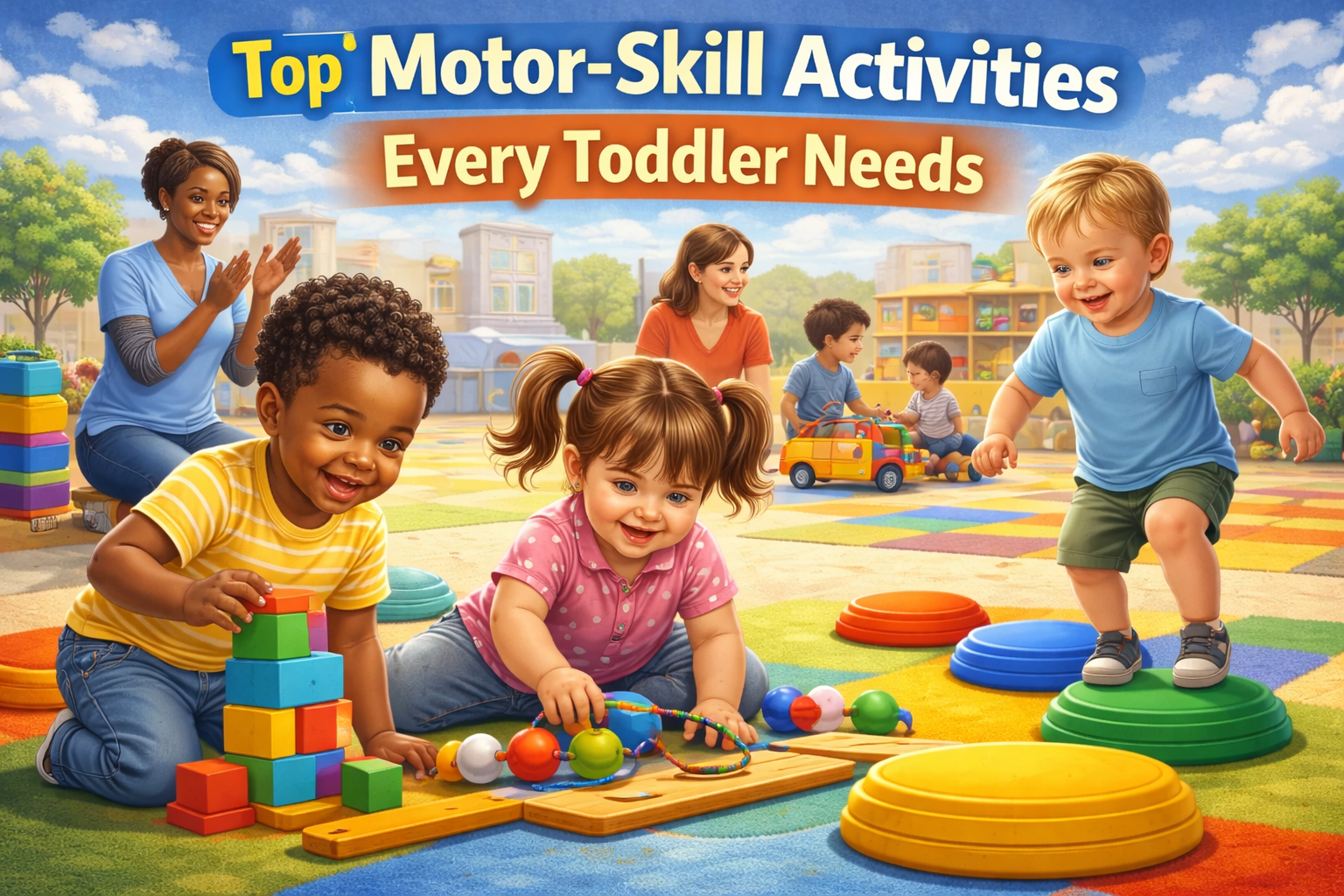
Toddlers are constantly on the move—climbing, grabbing, pushing, stacking, and exploring everything within reach. This isn’t just play; it’s motor skills development in action. Between the ages of one and three, children experience rapid physical growth, and the activities they engage in during this stage play a major role in their independence, confidence, and readiness for preschool.
Whether at home or in a toddler daycare setting, providing the right mix of fine and gross motor activities helps toddlers strengthen their muscles, improve coordination, and develop essential life skills. This guide explores the most important motor-skill activities every toddler needs and why they matter so much during early childhood.
Understanding Motor Skills in Toddlers
Motor skills refer to a child’s ability to control their body movements. These skills are divided into two main categories:
- Gross motor skills: Large movements involving arms, legs, and core muscles
- Fine motor skills: Small, precise movements using hands and fingers
Healthy toddler development depends on strengthening both types in balanced ways.
Why Motor Skills Development Is Critical in Early Childhood
Motor skills are directly connected to a toddler’s ability to:
- Explore their environment
- Gain independence
- Build self-confidence
- Develop brain connections
- Prepare for preschool tasks like writing and sitting attentively
Children who regularly practice motor activities tend to show better focus, emotional regulation, and social engagement—especially in structured environments like toddler daycare programs.
Essential Gross Motor Activities for Toddlers
Gross motor activities help toddlers develop strength, balance, coordination, and body awareness.
- Walking, Running, and Chasing Games
Simple movement activities are foundational for toddlers.
Benefits:
- Strengthens leg and core muscles
- Improves balance and coordination
- Encourages spatial awareness
Activities like chasing bubbles, following a caregiver, or walking along a safe path help toddlers master controlled movement.
- Climbing and Crawling Activities
Climbing is a natural and powerful gross motor activity for toddlers.
Examples:
- Soft climbing structures
- Cushioned steps or ramps
- Crawling tunnels
Developmental Impact:
- Builds upper and lower body strength
- Improves coordination between arms and legs
- Enhances problem-solving as toddlers figure out how to move safely
In toddler daycare environments, supervised climbing builds confidence while maintaining safety.
- Jumping and Bouncing
Jumping strengthens muscles and introduces toddlers to controlled impact.
Simple Jumping Activities:
- Jumping on soft mats
- Bouncing with both feet
- Assisted mini jumps while holding hands
These activities improve leg strength, balance, and coordination while boosting body awareness.
- Pushing and Pulling Toys
Push-and-pull toys are excellent for early gross motor control.
Why They Matter:
- Encourage upright walking
- Improve balance
- Strengthen arm and shoulder muscles
Toddlers learn how force and movement work together, which supports both physical and cognitive development.
- Ball Play (Rolling, Throwing, Kicking)
Ball activities support whole-body coordination.
Skills Developed:
- Hand-eye coordination
- Foot-eye coordination
- Balance and timing
Rolling a ball back and forth also introduces turn-taking, an early social skill essential for preschool readiness.
Essential Fine Motor Skill Activities for Toddlers
Fine motor skills prepare toddlers for tasks that require precision, such as feeding themselves, dressing, and eventually writing.
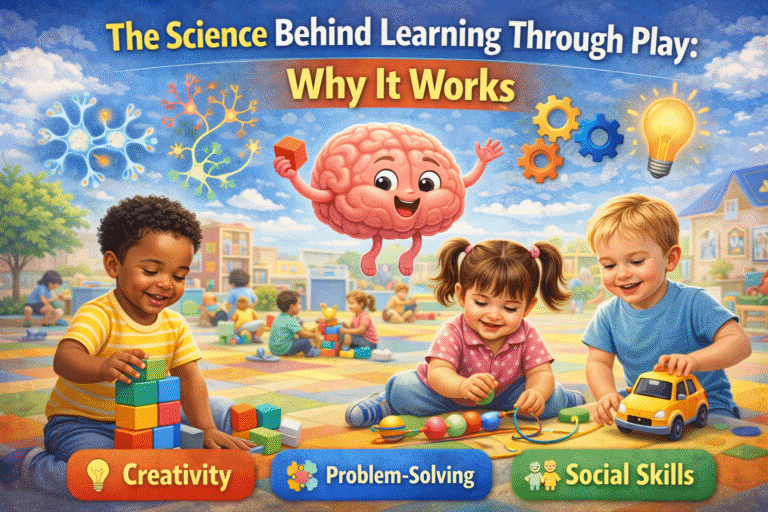
- Stacking and Building Activities
Blocks, cups, and stackable toys are classic toddler tools for a reason.
Benefits:
- Strengthens finger and hand muscles
- Improves coordination
- Encourages problem-solving
Stacking teaches toddlers patience, control, and persistence—even when towers fall.
- Shape Sorters and Puzzles
Shape sorting and simple puzzles enhance fine motor control and thinking skills.
What Toddlers Learn:
- Grasping and releasing objects
- Matching shapes and sizes
- Cause-and-effect reasoning
These activities also support early math and spatial awareness.
- Drawing, Scribbling, and Art Activities
Art is one of the most effective fine motor activities for toddlers.
Examples:
- Crayons and thick markers
- Finger painting
- Drawing on large paper surfaces
Developmental Benefits:
- Strengthens hand and wrist muscles
- Encourages creativity
- Prepares toddlers for writing skills
In toddler daycare settings, art activities also help children follow instructions and express emotions.
- Self-Feeding Activities
Self-feeding is a powerful fine motor skill builder.
Skills Practiced:
- Grasping spoons and finger foods
- Hand-to-mouth coordination
- Wrist control
Allowing toddlers to feed themselves—even messily—supports independence and confidence.
- Dressing and Undressing Practice
Daily routines can become motor skill opportunities.
Activities Include:
- Pulling socks on and off
- Opening Velcro shoes
- Practicing zippers with help
These actions strengthen finger coordination and prepare toddlers for greater independence at preschool age.
Sensory Play That Supports Motor Development
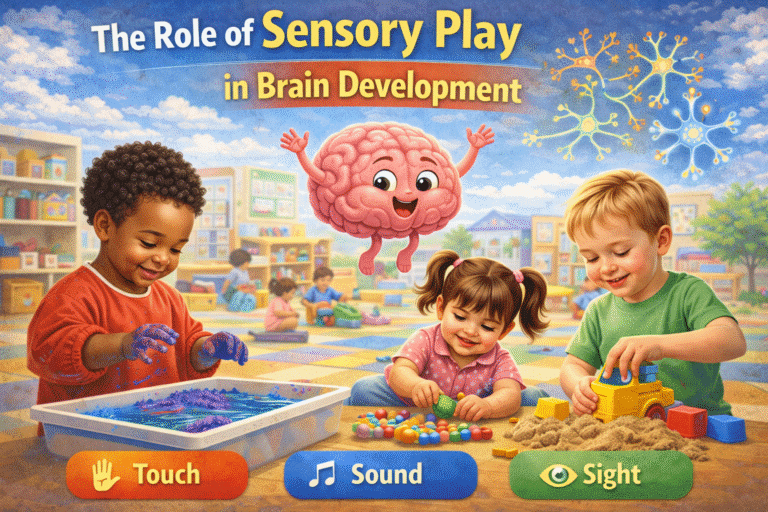
Sensory play combines movement with touch, making it ideal for toddlers.
- Sand, Water, and Texture Play
Sensory bins and outdoor play areas encourage exploration.
Motor Benefits:
- Scooping and pouring builds hand strength
- Squeezing improves grip control
- Stirring and digging enhance coordination
These activities are commonly used in toddler daycare programs because they engage multiple developmental areas at once.
Music and Movement Activities
- Dancing and Action Songs
Music-based movement activities are fun and highly effective.
Examples:
- Clapping to rhythms
- Simple dance moves
- Action songs with gestures
These activities support balance, coordination, listening skills, and body awareness—all while keeping toddlers engaged.
Outdoor Play and Motor Growth
Outdoor environments offer unique opportunities for motor development.
- Playground Exploration
Playgrounds encourage natural movement patterns such as:
- Climbing
- Sliding
- Running
- Balancing
Outdoor play improves strength, coordination, and confidence while allowing toddlers to burn energy in healthy ways.
How Toddler Daycare Supports Motor Skill Development
High-quality toddler daycare programs intentionally design daily routines around movement and play.
They offer:
- Safe spaces for active play
- Age-appropriate motor challenges
- Supervised exploration
- Balanced fine and gross motor activities
Consistent exposure to structured and free movement helps toddlers reach developmental milestones more confidently and on time.
Signs of Healthy Motor Development in Toddlers
While every child develops at their own pace, common indicators include:
- Walking and climbing confidently
- Using hands to explore objects
- Showing interest in drawing or stacking
- Increasing independence in daily tasks
Daycare caregivers often help monitor progress and communicate milestones to parents.
Tips for Supporting Motor Skills at Home
Parents can easily reinforce motor development with simple daily habits:
- Allow safe movement instead of restricting activity
- Provide age-appropriate toys
- Encourage independence, even when tasks take longer
- Celebrate effort, not perfection
Motor development thrives when toddlers feel supported, not rushed.
Final Thoughts: Building Strong Foundations Through Movement
Motor skills are the foundation of nearly every aspect of toddler development—from independence and confidence to learning and social interaction. The right mix of toddler activities, especially those that support motor skills development, prepares children for preschool and beyond.
Whether at home or in a toddler daycare setting, consistent opportunities to move, explore, and practice are essential. By prioritizing both fine and gross motor activities, parents and caregivers help toddlers grow into capable, confident, and curious learners.